

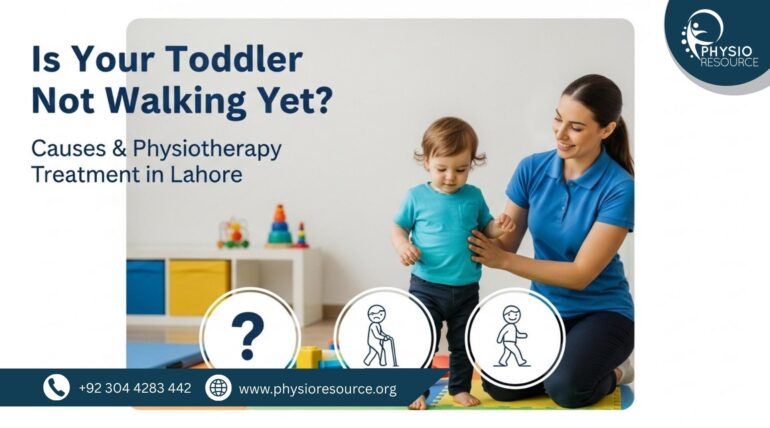
Walking is really something for parents. It is very exciting to see a little kid take their steps. This is a deal because it means they are becoming more independent and confident. They are also getting better at moving their body. When a child does not walk when they are supposed to parents start to get worried.
This guide is about kids who walk late. It tells you why this happens, when you should get help and how pediatric physiotherapy in Lahore can help your child develop properly.
When does a toddler start walking?
This is a question for many parents. A toddler usually starts to walk on their own at some point. Most of the time this happens when the toddler is one year old. It is very important to remember that every toddler is different. Some toddlers may start walking and some may start walking a bit later. The toddler will let you know when they are ready to start walking. You will see the toddler trying to stand up and take a step. This is an exciting time for parents.
When the toddler does start walking, they will probably be very unsteady at first. The toddler will likely fall down a lot. This is totally normal. The toddler is just learning how to balance and walk. With a time and practice the toddler will get better and better at walking. It is an idea to make sure the toddler has a safe place to practice walking. You can do this by removing any things from the floor and making sure the floor is not slippery.
Common Causes of Delayed Walking in Toddlers
Delayed walking can happen for a lot of reasons. At Physio Resource they look at the child to figure out what is causing delayed walking. They want to know why the child is having trouble walking.
1. Developmental Delay
Some kids just need a little time to get good at moving around and doing things. This can be because of:
- Low muscle tone
- Poor balance
- Slow motor planning
- Limited opportunities for movement
2. Muscle Weakness
People often have weakness, in their legs or hips or core. That makes it really hard to stand up and walk around. This happens a lot to people who have:
- Premature babies
- Children with low activity levels
Toddlers who skipped crawling are still able to develop. The thing is, toddlers who skipped crawling can still learn to walk and run. Some toddlers who skipped crawling might need to work on their balance. Generally, toddlers who skipped crawling will be just fine.
3. Neurological Conditions
Some health problems that affect the brain and nerves can make it hard for muscles to work properly. Can also affect how well people can move around and do things. These health problems include:
- Cerebral palsy
- Down syndrome
- Muscular dystrophy
- Global developmental delay
- Early physiotherapy is crucial for these children.
4. Orthopedic Issues
There are some problems that can slow down the process of walking. These problems can be things, like:
- Hip dysplasia
- Flat feet
- In‑toeing or out‑toeing
- Bow legs or knock knees
5. Environmental & Behavioral Factors
- Sometimes the cause is simple:
- Overuse of walkers or jumpers
- Limited floor time
- Fear of falling
- Being naturally cautious
Physiotherapy does a lot of things for toddlers. It helps them walk and run around like kids. The physiotherapist will do exercises with the toddler to help them get better at walking.
Here are some ways physiotherapy helps toddlers with walking:
- It helps them get muscles in their legs and feet
- It helps them balance better so they do not fall down
- It helps them walk and run around like kids
How do we deal with Toddlers’ Delayed Walking at Physio Resource?
At Physio Resource, the pediatric physiotherapy programs we have are made to help kids get stronger, better at balancing and more confident. We do this by using games and activities that are fun for children so they can learn and grow while they play. The pediatric physiotherapy programs at Physio Resource are really about helping kids through play-based and child-friendly therapy.
1. Detailed Assessment
We start with:
- Motor milestone evaluation
- Muscle tone and strength testing
- Gait and posture analysis
- Neurological and orthopedic screening
This helps us make a plan of treatment that is just, for the patient. The treatment plan is personalized to help the patient get better. We create the personalized treatment plan to make sure the patient gets the care.
2. Strengthening Exercises
We use fun and engaging activities to make things stronger like this: Fun games and Fun things to do. We do these activities to strengthen the skills of people who do fun things and these fun activities are really good, at strengthening the fun things that people do.
- Leg muscles
- Core stability
- Hip and pelvic control
Our feet are really important for standing and walking. Feet are necessary for standing and walking. We use our feet for standing and walking every day. Feet are crucial, for standing and walking because they help us balance.
3. Balance and Coordination Training
Therapy includes:
- Standing balance tasks
- Obstacle courses
- Step training
- Supported walking
These activities are really good, for the confidence. They also help with motor control. They make a person feel more confident. They help people control their movements better. The activities improve the confidence and the motor control of a person.
4. Gait Training
If a child is ready to walk, we guide them through:
- Supported walking
- Treadmill training (if needed)
- Correction of abnormal gait patterns
5. Parent Education
Parents are very important for our progress. We teach our kids things that help them in life.
- How to be people
- How to make friends
- How to do things, on them
Parents do a lot to help their kids become good people. Parents are always there to support their kids and help them when they need it. Our parents teach us things that we use every day.
- Home exercises
- Safe ways to encourage walking
- Activities to avoid (e.g., excessive walker use)
Success Stories at Physio Resource
Our clinic has helped a lot of kids take their first steps and feel good about it. We have seen many toddlers do this with confidence at our clinic. The toddlers, at our clinic take their steps with confidence. There are some transformations that really stand out. These are the ones that people remember for a time. Some memorable transformations include:
- This little kid is 20 months old. The kid started walking by himself after he had special therapy for 6 weeks. The therapy was, for him. It really worked for the kid. The kid was able to walk on his own after 6 weeks of this special therapy.
- A child with cerebral palsy was able to get better at balancing and moving around. This child improved balance and mobility much that they were able to join in preschool activities. The child with cerebral palsy was really happy to be a part of preschool activities. The improvement in balance and mobility for the child, with cerebral palsy made a big difference.
- A baby who was born soon was able to catch up with important milestones because of early intervention. The baby was able to do things that other babies can do at the time. This happened because the baby got help on. The early intervention really made a difference, for the premature baby. The premature baby was able to catch up with milestones.
These stories show that we really care about kids and we make sure that the physiotherapy we do is based on facts and things that actually work for children. We are committed to doing physiotherapy that’s all, about the child.
Contact us
Physio Resource
Phone No: 0304-4283442
Address: 93-A1, Gurumangat Road, Gullberg, III Lahore
The Author – Doctor Ahmad Bilal
Dr. Ahmad Bilal is a sports physiotherapist whose work in the area of post-event recovery and endurance athlete rehabilitation is widely recognized. He uses evidence-based techniques to facilitate runners’ safe and strong returns.
By Dr. Ahmad Bilal, Consultant Physiotherapist – Physio Resource, Lahore
