

After Ramadan is over, it is time to start walking and going to the gym again without getting hurt. A lot of people feel stiff and tired. Get joint pain when they start walking or going to the gym after Ramadan. This happens because we do not move around much when we are fasting, so our muscles get a little weak and we lose some flexibility. The best way to start exercising is to do it slowly, build up our strength and not try to do too much too soon. People who live in Gulberg Lahore and want to start exercising after Ramadan often go to Physio Resource for help. Physio Resource is a top physiotherapy clinic in Gulberg Lahore, and they have the best physiotherapist in Lahore. The physiotherapist at Physio Resource helps people get back in shape without getting hurt.
When we are fasting for Ramadan, our sleep schedule and the amount of water we drink can. We might not be as active as we usually are. This can make our muscles a little weaker. If we try to start exercising much too soon, we might hurt our muscles, get knee pain, lower back pain or feel really tired. That is why physiotherapists say we should start exercising slowly instead of trying to do too much too soon. They call this a return-to-exercise strategy, which means we start with small workouts and slowly get back to our old routine.
Why Exercise Feels Difficult After Ramadan?
Many people have trouble with exercise after Ramadan. They usually have problems like
- Muscle stiffness
- They get tired easily
- Their joints hurt
- Their lower back feels tight
- They are not as flexible as they used to be
This happens because the muscles and joints need time to get used to exercise
At Physio Resource physiotherapy clinic in Gulberg Lahore, the therapists help people get back to exercise safely. They make a plan to help people get back to fitness without hurting themselves.
Also, read: Why Leg Cramps Happen During Fasting?
Safe Plan to Restart Walking and Gym Workouts
The way to start exercising again is to do a little bit more each day for 2 or 3 weeks.
Week 1
- Take walks
- Do some simple exercises to help you move
- Stretch gently
Week 2
- Walk a bit faster
- Do exercises that use your own body weight
- Make your core muscles stronger
Week 3
- Start going to the gym
- Use weights to make your muscles stronger
- Do some cardio exercises
This way of doing things helps your muscles get strong again without hurting your joints.
10 Best Exercises to Restart Fitness After Ramadan
These exercises help you get mobile and strong again.
1. Brisk Walking for 15 to 20 minutes
This helps your blood flow. Makes you less tired.
2. Neck Mobility Exercises
These help if you have been sitting for a time and your neck is stiff.
3. Shoulder Rolls
These help you relax your body.
4. Bodyweight Squats
These make your legs stronger. Help your joints.
5. Wall Push-Ups
These help you get stronger slowly.
6. Glute Bridge
This helps make your lower back and hips stronger.
7. Standing Calf Raises
These help your legs get blood flow.
8. Cat-Camel Stretch
This helps you bend and twist easily.
9. Bird Dog Exercise
This helps you balance. Makes your core muscles stronger.
10. Plank Hold, for a time
This makes your stomach and back muscles stronger.
Do these exercises 3 or 4 times a week to get strong again.
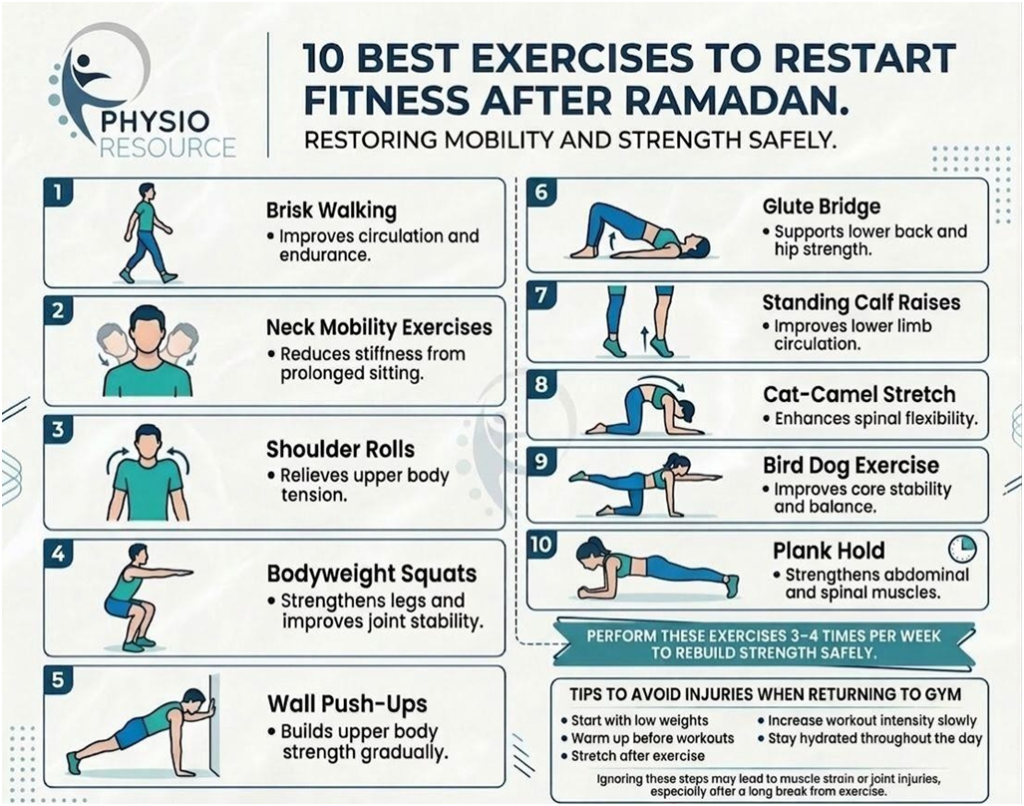
Tips to Avoid Injuries When Returning to the Gym
- Start with low weights when you are getting back to the gym
- You should warm up before you start your workouts
- Always stretch after you finish exercising
- Increase the intensity of your workouts slowly over time
- Stay hydrated throughout the day to avoid any problems
If you do not follow these steps, you may get muscle strain or joint injuries after a long break from exercise. Gym is a place where people go to work out. It is very important to be careful when you are returning to the gym.
Nutrition for Post-Ramadan Fitness Recovery
After Ramadan eating the food helps your muscles recover and regain energy. At Physio Resource you can talk to the nutritionist in Lahore who can guide you on
- Eating meals that are rich in protein to repair your muscles
- Ways to stay hydrated
- Having a balanced diet to boost your energy and metabolism
- Eating foods that can help reduce inflammation and support joint health
Combining good nutrition with guidance from a physiotherapist can really help you recover and perform better physically. Physiotherapy and nutrition are both very important for recovery.
Schedule an Appointment
If you have muscle pain, joint stiffness or difficulty getting back to exercise after Ramadan, getting guidance from a professional can really help prevent injuries. Schedule an appointment at Physio Resource, which is the best physiotherapy clinic in Gulberg Lahore and get expert treatment from the best physiotherapist in Lahore.
Contact us
Physio Resource
Phone No: 0304-4283442
Address: 93-A1, Gurumangat Road, Gullberg, III Lahore
About the Author
Dr Ahmad Bilal, DPT, MS-NMPT
Dr Ahmad Bilal is a physiotherapist who specializes in helping people with muscle and joint problems exercise therapy and preventing injuries. He has helped many patients safely get back, to activity after long breaks or lifestyle changes. He currently works at Physio Resource in Gulberg Lahore, where he provides physiotherapy treatment that is based on evidence and focused on restoring strength, mobility and overall physical health. Dr Ahmad Bilal is a physiotherapist who cares about his patients.
FAQs – Restarting Exercise After Ramadan
1. Is it normal to feel weak or stiff when restarting exercise after Ramadan?
It is very common to feel weak or stiff when restarting exercise after Ramadan. During Ramadan many people reduce activity, which can temporarily decrease muscle strength, endurance and flexibility in the body. The body can adapt again within one to two weeks if you start with exercise and gradually increase the intensity of the exercise.
2. How soon can I return to the gym after Ramadan?
You can usually return to the gym after Ramadan. However, it is important to start with low- intensity workouts at the gym after Ramadan. You should gradually increase the exercise intensity over two to three weeks to avoid muscle strain or joint pain when you are at the gym after Ramadan.
3. What is the safest way to restart workouts after Ramadan?
The safest approach to restart workouts after Ramadan is an exercise routine.
- Week one should include walking and stretching
- Week two should include bodyweight exercises
- Week three should include gym training after Ramadan.
This gradual progression helps prevent injuries and allows the muscles to regain strength when you restart exercise after Ramadan.
4. Why do some people experience pain after restarting exercise?
Joint pain can occur if the workouts are too intense after a break or if the muscles supporting the joints are weak when you restart exercise after Ramadan. A proper warm-up, stretching and gradual training can help reduce the risk of discomfort when you restart exercise after Ramadan.
5. How long should workouts be after Ramadan?
Initially workouts should be twenty to thirty minutes long. Focus on mobility and light strength exercises when you restart exercise after Ramadan. As endurance improves the workout duration can gradually increase to forty-five to sixty minutes when you are doing exercise after Ramadan.
