


When is the best time to exercise in Ramadan in Lahore? A lot of people want to know if it is safe to exercise during Ramadan and when they should do it. The answer is easy: the best time to exercise in Ramadan is thirty to forty-five minutes before Iftar. One to two hours after Iftar. This is when the body has energy and water to exercise safely.
Many people in Gulberg, Lahore, who are looking for the time to exercise in Ramadan, go to Physio Resource for advice. Physio Resource is a good physiotherapy clinic in Gulberg, Lahore. The physiotherapist in Lahore, at Physio Resource, helps people make an exercise plan that will not hurt their muscles or joints while they are fasting.
When you are fasting in Ramadan, your body goes through some changes. Your body’s metabolism and hydration levels are different. You have less energy. If you exercise at the time, you might feel tired, dizzy and get muscle cramps. If you exercise at the right time and do it correctly, it can actually make you feel more energetic and keep your muscles strong. Exercise can also help you stay healthy while you are fasting in Ramadan.
The Importance of Exercising Throughout Ramadan
Fasting requires people to stay home from their regular activities, which leads to various health advantages from remaining active throughout their fasting period.
The advantages of physical activity during fasting periods include:
The exercise helps people to maintain their muscle strength.
The workout session helps people to increase their metabolic rate while they burn fat.
The exercise helps people to maintain their joint flexibility.
The exercise improves mental health for people who use it.
The exercise helps people to control their weight.
The physiotherapy clinic at Physio Resource located in Gulberg Lahore provides treatment through their physiotherapists who recommend patients to practice moderate exercise programs instead of performing high-intensity training during Ramadan.
Also, read: Heel Pain in Ramadan: Standing More Without Foot Pain
Best Times to Exercise in Ramadan
Before Iftar (30–45 Minutes Before Breaking Fast)
This is one of the most recommended times because:
The body prepares to receive hydration and nutrients from upcoming meals. The body requires light exercise to burn fat. The body can perform low-intensity workouts because its energy levels are sufficient.
Best activities:
The people need to perform walking.
The people need to perform stretching.
The people need to perform light mobility exercises.
After Iftar (1–2 Hours Later)
The optimal time to do moderate exercise exists because people possess sufficient hydration and nutritional intake.
Recommended workouts:
The people need to perform strength training.
The people need to perform physiotherapy exercises.
The people need to perform light cardio.
The people need to perform rehabilitation exercises.
After Taraweeh
Many people in Lahore prefer late-night workouts after Taraweeh prayers. At this time:
The body has finished its digestion process.
The body reaches higher energy levels.
The body achieves better performance results during exercise.
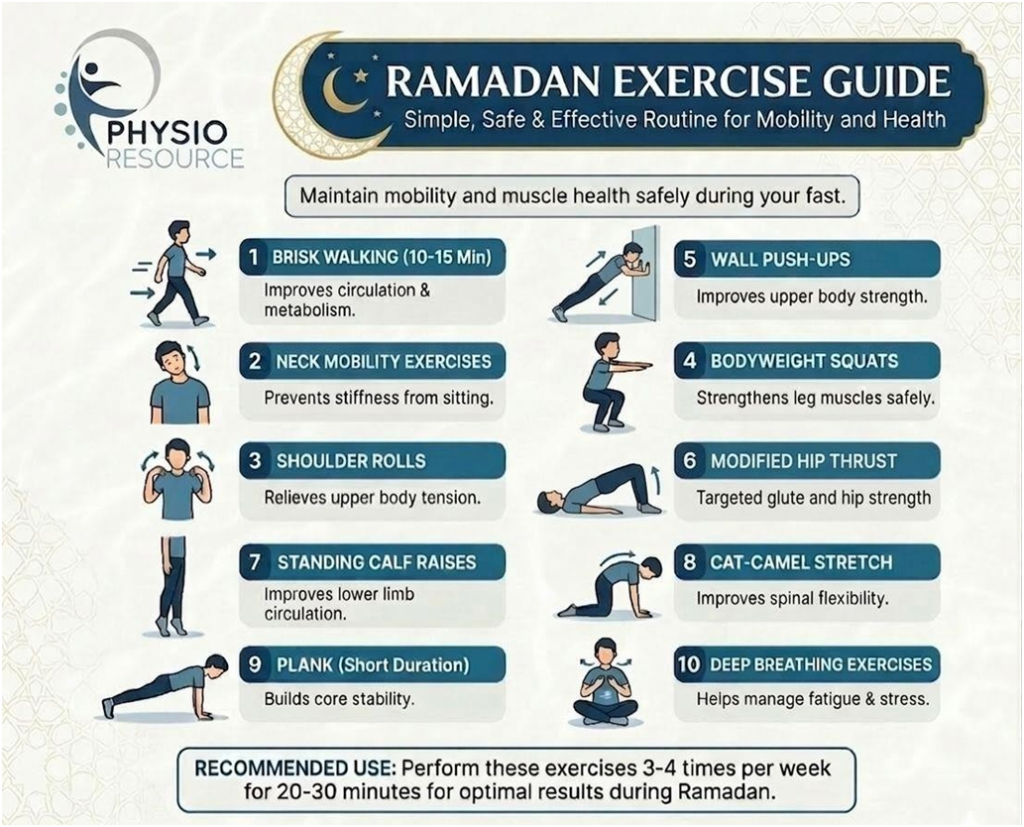
Simple Ramadan Exercise Routine (10 Recommended Exercises)
The safe exercises enable people to preserve their mobility while keeping their muscle strength during Ramadan.
Brisk Walking (10–15 minutes)
The exercise session helps to boost both blood flow and metabolic activity.
Neck Mobility Exercises
The exercise prevents stiffness, which occurs after people sit for extended periods.
Shoulder Rolls
The exercise helps to reduce muscle tension which exists in the upper body.
Bodyweight Squats
The exercise enables people to strengthen their leg muscles through a secure method.
Wall Push-Ups
The exercise helps to develop upper-body strength.
Glute Bridge Exercise
The exercise helps to build strength in the hip and lower back areas.
Standing Calf Raises
This exercise helps to improve blood flow in the lower body.
Cat-Camel Stretch
This exercise helps to enhance spinal movement abilities.
Plank (Short Duration)
The exercise establishes core body strength.
Deep Breathing Exercises
The practice helps people to control their exhaustion and anxiety.
The Ramadan period requires you to perform these exercises 3 to 4 days per week for 20 to 30 minutes each session to achieve maximum benefits.
Tips for Exercising Safely During Ramadan
Fasting hours should not include any intense exercise activities.
People should consume enough water between Iftar and Suhoor.
People should complete warm-up exercises before they start their workout session.
People should do exercise at a level between light exercise and moderate exercise.
People should stop their workout if they start experiencing dizziness.
People who experience back pain or joint pain or muscle injuries should see a physiotherapist before they begin their workout program.
Nutrition Tips for Ramadan Fitness
Proper nutrition during Ramadan serves as the primary factor which determines exercise performance. At Physio Resource, patients can also consult the best nutritionist in Lahore who helps create balanced Ramadan meal plans including:
Protein-rich foods for muscle recovery
Complex carbohydrates for sustained energy
Electrolytes to prevent dehydration
Anti-inflammatory foods for joint health
People who combine proper nutrition with physiotherapy will experience energy maintenance along with muscle preservation and endurance increase throughout Ramadan.
Schedule an Appointment
The experts provide assistance for safe exercise practices during Ramadan and for physiotherapy treatment. Physio Resource operates as the leading physiotherapy clinic in Gulberg Lahore and allows you to book an appointment to receive treatment from the top physiotherapist in Lahore. The best physiotherapy clinic in Gulberg Lahore provides specialized services at Physio Resource. The clinic offers patients access to:
Best female physiotherapist in Lahore Gulberg for women who prefer private and comfortable care
Physiotherapy at home services in Lahore, allowing patients with mobility issues to receive expert rehabilitation in their homes
Physio Resource
Phone No: 0304-4283442
Address: 93-A1, Gurumangat Road, Gullberg, III Lahore
About the Author
Dr Ahmad Bilal, DPT, MS-NMPT
Dr Ahmad Bilal is a highly skilled physiotherapist who specializes in the rehabilitation of musculoskeletal injuries through exercise therapy and methods for preventing injuries. He has extensive experience guiding patients on safe exercise routines, posture correction, and rehabilitation programs.
He works at Physio Resource in Gulberg Lahore while delivering his patients evidence-based physiotherapy treatment which helps them achieve long-lasting health benefits and functional recovery.
FAQs – Best Time to Exercise in Ramadan
Is it safe to exercise while fasting in Ramadan?
Yes, people can safely perform light to moderate exercise during Ramadan when they choose appropriate times for their workouts. Most physiotherapists recommend 30–45 minutes before Iftar or 1–2 hours after Iftar, when hydration and energy levels are more stable.
What is the best time to exercise in Ramadan?
The best time to exercise is shortly before Iftar or after Iftar once digestion begins. Before Iftar, people should do light activities such as walking and stretching, while after Iftar, strength training and physiotherapy exercises become more effective.
Can exercising while fasting cause dehydration?
Yes, intense exercise during fasting hours can lead to dehydration, fatigue, and dizziness. Experts recommend low-intensity workouts before Iftar and moderate exercise after Iftar when you can drink water, according to their guidelines.
What type of exercise is best during Ramadan?
The safest exercises during Ramadan include:
Walking
Stretching
Mobility exercises
Light strength training
Physiotherapy rehabilitation exercises
High-intensity workouts should be reduced to prevent exhaustion.
How long should workouts be during Ramadan?
Experts recommend that people should exercise at a moderate intensity for 20 to 30 minutes during Ramadan. The body will experience fatigue from extended or vigorous workouts because fasting reduces energy reserves.
Should I exercise before Suhoor?
Most people should not exercise before Suhoor because their bodies still experience sleepiness and dehydration. However, light stretching or yoga before Suhoor can help improve flexibility and circulation.
What should I eat after exercising in Ramadan?
Your body requires hydration, protein and balanced nutrients after exercise. Good options include:
Water and electrolyte drinks
Dates and fruit
Lean protein, like eggs or chicken
Complex carbohydrates, such as oats or brown bread, help muscles recover faster.
When should I see a physiotherapist for exercise guidance during Ramadan?
You should consult a physiotherapist if you experience:
Persistent joint pain
Back or neck pain during workouts
Muscle injuries
Fatigue or dizziness during exercise
A physiotherapist can design a safe Ramadan exercise routine tailored to your body and health condition.
Do physiotherapy clinics in Lahore provide Ramadan fitness guidance?
Many clinics provide exercise guidance for Ramadan. The Physiotherapy clinic at Physio Resource in Gulberg, Lahore, helps patients manage their physical activity and rehabilitation exercises and correct their posture during fasting.
Tips for Exercising Safely During Ramadan
Fasting hours should not include any intense exercise activities.
People should consume enough water between Iftar and Suhoor.
People should complete warm-up exercises before they start their workout session.
People should do exercise at a level between light exercise and moderate exercise.
People should stop their workout if they start experiencing dizziness.
People who experience back pain or joint pain or muscle injuries should see a physiotherapist before they begin their workout program.
Nutrition Tips for Ramadan Fitness
Proper nutrition during Ramadan serves as the primary factor which determines exercise performance. At Physio Resource, patients can also consult the best nutritionist in Lahore who helps create balanced Ramadan meal plans including:
Protein-rich foods for muscle recovery
Complex carbohydrates for sustained energy
Electrolytes to prevent dehydration
Anti-inflammatory foods for joint health
People who combine proper nutrition with physiotherapy will experience energy maintenance along with muscle preservation and endurance increase throughout Ramadan.
Schedule an Appointment
The experts provide assistance for safe exercise practices during Ramadan and for physiotherapy treatment. Physio Resource operates as the leading physiotherapy clinic in Gulberg Lahore and allows you to book an appointment to receive treatment from the top physiotherapist in Lahore. The best physiotherapy clinic in Gulberg Lahore provides specialized services at Physio Resource. The clinic offers patients access to:
Best female physiotherapist in Lahore Gulberg for women who prefer private and comfortable care
Physiotherapy at home services in Lahore, allowing patients with mobility issues to receive expert rehabilitation in their homes
About the Author
Dr Ahmad Bilal, DPT, MS-NMPT
Dr Ahmad Bilal is a highly skilled physiotherapist who specializes in rehabilitation of musculoskeletal injuries through exercise therapy and methods for preventing injuries. He has extensive experience guiding patients on safe exercise routines, posture correction, and rehabilitation programs.
He works at Physio Resource in Gulberg Lahore while delivering his patients evidence-based physiotherapy treatment which helps them achieve long-lasting health benefits and functional recovery.
FAQs – Best Time to Exercise in Ramadan
Is it safe to exercise while fasting in Ramadan?
Yes, people can safely perform light to moderate exercise during Ramadan when they choose appropriate times for their workouts. Most physiotherapists recommend 30–45 minutes before Iftar or 1–2 hours after Iftar, when hydration and energy levels are more stable.
What is the best time to exercise in Ramadan?
The best time to exercise is shortly before Iftar or after Iftar once digestion begins. Before Iftar people should do light activities such as walking and stretching while after Iftar strength training and physiotherapy exercises become more effective.
Can exercising while fasting cause dehydration?
Yes, intense exercise during fasting hours can lead to dehydration, fatigue, and dizziness. Experts recommend low-intensity workouts before Iftar and moderate exercise after Iftar when you can drink water according to their guidelines.
What type of exercise is best during Ramadan?
The safest exercises during Ramadan include:
Walking
Stretching
Mobility exercises
Light strength training
Physiotherapy rehabilitation exercises
High-intensity workouts should be reduced to prevent exhaustion.
How long should workouts be during Ramadan?
Experts recommend that people should exercise at a moderate intensity for 20 to 30 minutes during Ramadan. The body will experience fatigue from extended or vigorous workouts because fasting reduces energy reserves.
Should I exercise before Suhoor?
Most people should not exercise before Suhoor because their bodies still experience sleepiness and dehydration. However, light stretching or yoga before Suhoor can help improve flexibility and circulation.
What should I eat after exercising in Ramadan?
Your body requires hydration and protein and balanced nutrients after exercise. Good options include:
Water and electrolyte drinks
Dates and fruit
Lean protein like eggs or chicken
Complex carbohydrates such as oats or brown bread A balanced diet helps muscles recover faster.
When should I see a physiotherapist for exercise guidance during Ramadan?
You should consult a physiotherapist if you experience:
Persistent joint pain
Back or neck pain during workouts
Muscle injuries
Fatigue or dizziness during exercise
A physiotherapist can design a safe Ramadan exercise routine tailored to your body and health condition.
Do physiotherapy clinics in Lahore provide Ramadan fitness guidance?
Many clinics provide exercise guidance for Ramadan. The Physiotherapy clinic at Physio Resource in Gulberg Lahore helps patients manage their physical activity and rehabilitation exercises and correct their posture during fasting.
