

Low energy during fasting is most commonly caused by “reduced blood sugar, dehydration, prolonged sitting, and slowed circulation — and the safest, fastest solution is short, gentle “movement snacks” that wake up your nervous system without exhausting your body or breaking your fast. Even 2–5 minutes of the right kind of movement can immediately improve alertness, focus, and posture while protecting your joints and muscles”.
This is exactly what we recommend daily at Physio Resource, especially during Ramadan and intermittent fasting.
Why Do You Feel Low Energy While Fasting?
Your body changes its energy source from glucose to fat during fasting. The process of switching energy sources causes:
• People experience brain fog with poor ability to concentrate.
• People develop stiffness in their neck back and knee joints.
• The body experiences reduced blood flow to its extremities.
• People experience head pressure which makes them feel tired.
What we see in clinic: Many patients assume they need caffeine or sugar but the nervous system requires movement input to function properly.
Read more: Chronic Pain Syndrome
What Are “Movement Snacks”?
Movement snacks consist of tiny exercise sessions which last between two to five minutes to enhance blood flow and body posture and mental function without creating high heart rates and fatigue.
Safe Movement Snacks During Fasting
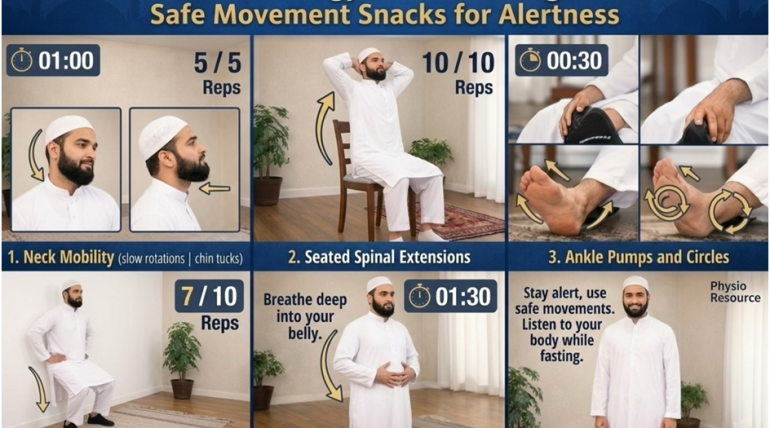
- Neck mobility (slow rotations | chin tucks)
- Seated spinal extensions
- Ankle pumps and circles
- Wall-supported mini squats (pain-free range)
- Deep diaphragmatic breathing (60–90 seconds)
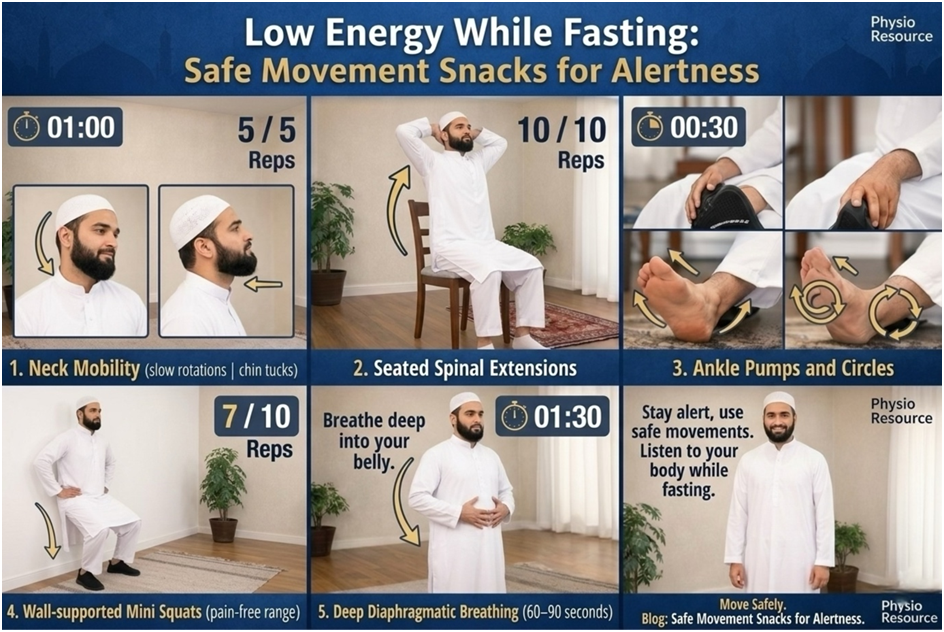
Clinical note: These movements activate the nervous system which leads to better oxygen distribution and decreased muscle strain. This method benefits office workers and people who pray Taraweeh.
When Should You Be Careful?
People need to get physiotherapy assessment when they experience:
- Dizziness or fainting
- Persistent knee or back pain during fasting
- Numbness, tingling, or weakness
- Worsening fatigue despite rest
At Physio Resource – the best physiotherapy clinic in Gulberg – we assess posture, hydration patterns, sleep, and muscle activation to design fasting-safe rehab plans.
Treatment and Public Health Education (Physiotherapy-Approved)
The structured physiotherapy system needs to follow these steps:
1. The system needs to correct postures which include neck and thoracic spine and pelvis areas.
2. The system uses low-load activation exercises.
3. The system includes protection strategies which protect knee joints and back joints.
4. The program teaches people about hydration methods which involve drinking water during Sehri and Iftar times.
5. The system creates home exercise plans which match fasting schedules of users.
Our services include which offer:
• The top female physiotherapist in Lahore, Gulberg, who provides women a comfortable treatment environment.
• The service provides physiotherapy which travels to patients homes in Lahore who need treatment after surgery or for elderly care or for busy professionals.
Schedule your Appointment Now!
The physiotherapy clinic PhysioResource operates as a leading clinic which provides ethical treatment together with modern evaluation methods and practical recovery solutions. Our Gulberg clinic provides both in-clinic treatment and home physiotherapy services to patients throughout Lahore. The clinic provides evidence-based medical treatment with qualified male and female physiotherapists who deliver home physiotherapy services to create individual treatment programs that maintain safety during fasting periods.
You should make an appointment now to help your body recover energy during fasting. Book Now!
Author Information
Dr. Ahmad Bilal DPT, MSNPT
Senior Physiotherapist | Musculoskeletal & Postural Rehab Specialist
Dr. Ahmad Bilal treats fasting-related fatigue and musculoskeletal pain and posture problems through evidence-based physiotherapy methods which he adapts to Pakistani cultural patterns.
Physio Resource
Phone No: 0304-4283442
Address: 93-A1, Gurumangat Road, Gullberg, III Lahore

