

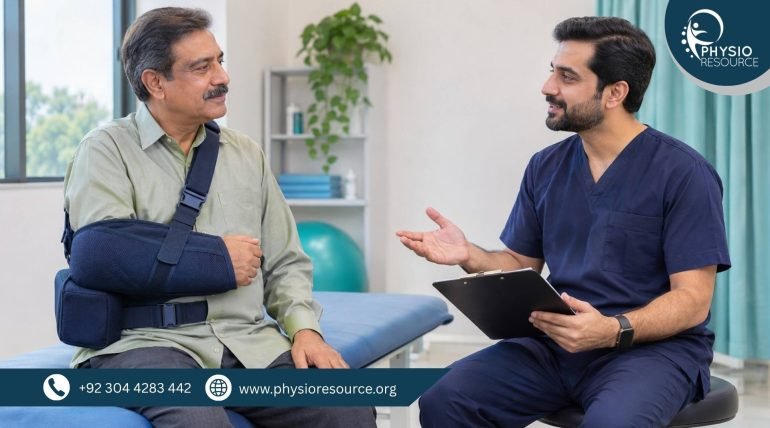
After rotator cuff surgery, many patients have the same concern: “Should I start moving my shoulder, or will movement damage the repair?”
It is a reasonable worry. You want to recover your shoulder movement and strength, but you also need to give the repaired tendon enough time to heal.
The important thing to understand is that physiotherapy usually starts early after rotator cuff repair, but shoulder exercises must follow the surgeon’s specific instructions.
Starting rehabilitation does not mean immediately lifting your arm or doing strengthening exercises.
When Should Physiotherapy Begin After Rotator Cuff Surgery?
In many cases, rehabilitation planning begins within the first few days after surgery. However, the timing of shoulder movement depends on the size of the tear, tendon quality, surgical technique and any additional procedures.
A typical rehabilitation programme may follow these stages:
Weeks 0–6: Protect the repair
- Wear the prescribed sling for the recommended period.
- Follow instructions about sleeping, dressing and daily activities.
- Move the fingers, wrist and elbow if permitted.
- Begin gentle passive shoulder movements only when authorised.
Weeks 6–12: Gradually restore shoulder movement
If the surgeon allows, rehabilitation may progress to assisted and then active shoulder movements. The aim is to improve mobility without placing excessive stress on the healing tendon.
Around 12 weeks onwards: Gradual strengthening
Progressive strengthening may begin when the repair and shoulder are ready. Exercises can include carefully selected resistance work for the rotator cuff and shoulder blade muscles.
These are general timeframes, not a universal prescription. Larger or more complex repairs may require a slower programme.
Also you may like: Shoulder Pain Worse at Night: Frozen Shoulder, Rotator Cuff or Something Else?
Which Exercises May Be Used After Rotator Cuff Repair?
The right exercise depends on the stage of healing and your surgeon’s protocol.
A physiotherapist may introduce:
- Finger and wrist movements: Gentle movements to maintain mobility while the shoulder is protected.
- Elbow movements: Bending and straightening the elbow if permitted by the surgeon.
- Passive shoulder movement: The arm is supported and moved without the operated shoulder muscles actively lifting it.
- Assisted shoulder movement: The unaffected arm or an approved aid helps guide the operated arm.
- Progressive strengthening: Introduced later when the tendon has healed sufficiently.
Do not start pendulum exercises, wall climbing, resistance bands or shoulder lifting simply because they are commonly recommended online. Some movements may be unsuitable at your stage of recovery.
What Happens If Physiotherapy Starts Too Early or Too Late?
Too much movement or loading too soon may place unnecessary stress on the repair. On the other hand, excessive immobilisation without an appropriate rehabilitation plan can contribute to stiffness and loss of movement.
The aim is to find the right balance: protect the healing tendon while gradually restoring shoulder function.
Seek medical advice if you develop increasing or severe pain, fever, wound redness, unusual discharge, sudden swelling or a sudden loss of movement after surgery.
Where Can You Find Shoulder Rehabilitation in Lahore?
Choosing the right physiotherapy support matters after rotator cuff surgery. If you are searching for best physiotherapy in Gulberg Lahore, top physiotherapy in Gulberg Lahore or the best physiotherapist in Lahore, look for an approach that follows your surgeon’s instructions and progresses according to your healing.
At Physio Resource, 93-A1, Gurumangat Road, Gulberg III, Lahore, you can enquire about post-operative shoulder rehabilitation and appointment availability.
The goal is not to rush your recovery. It is to restore movement, strength and confidence while protecting the surgical repair.
Contact us
Physio Resource
Phone No: 0304-4283442
Address: 93-A1, Gurumangat Road, Gullberg, III Lahore
Frequently Asked Questions
1. Can physiotherapy start immediately after rotator cuff surgery?
Rehabilitation planning and permitted exercises may begin early, but shoulder movement must follow the surgeon’s protocol.
2. How long should I wear a sling after rotator cuff repair?
Many patients wear a sling for around 4–6 weeks, but the duration varies with the repair and surgeon’s instructions.
3. When can I start strengthening exercises?
Strengthening often begins around 12 weeks, depending on healing, tear size and clinical progress.
4. Can I move my operated arm after surgery?
Only in the ways permitted by your surgeon. Passive, assisted and active movements are different and are introduced at different stages.
5. How long does recovery take after rotator cuff repair?
Recovery commonly takes several months. Regaining comfortable movement and strength depends on the size of the tear, healing and rehabilitation progress.
Author
Dr. Ahmed Bilal — Physio Resource
Dr. Ahmed Bilal is the named author of this educational article for Physio Resource. The article provides general health information and does not replace an individual clinical assessment.

