

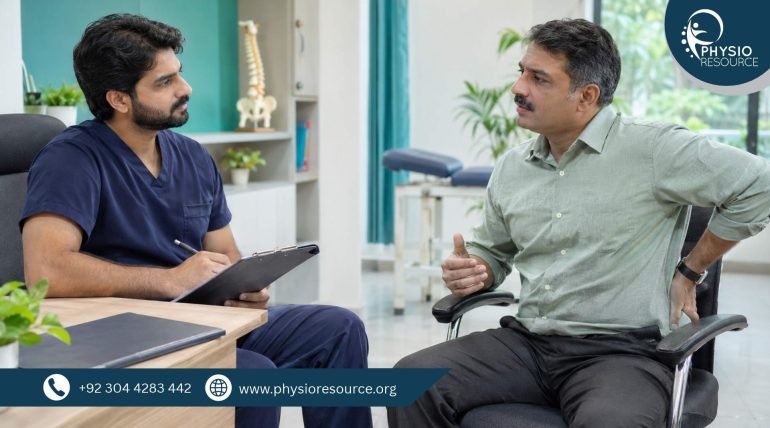
Back pain after a road accident may come from muscle strain, joint irritation or a more serious injury involving the spine. Before having osteopathic treatment, spinal manipulation or any hands-on therapy, a healthcare professional should check for possible fractures, spinal instability and nerve involvement. Even if you can walk, delayed pain or stiffness does not automatically rule out an injury.
The priority after an accident is to establish whether the spine and surrounding structures are safe to treat—not to immediately release tight muscles or adjust painful joints.
Why Can Back Pain Develop After a Road Accident?
A collision can expose your body to sudden acceleration, deceleration, twisting or direct impact. Depending on the circumstances, this may cause:
- Muscle and ligament strain: Soft tissues can become overstretched or irritated.
- Joint irritation: Sudden movement may aggravate structures around the spine.
- Disc-related symptoms: An injury may irritate a spinal disc or nearby nerve.
- Whiplash-associated symptoms: A sudden movement of the head and neck can cause neck pain, stiffness and sometimes pain around the upper back.
- Spinal fracture: A more serious injury may affect the vertebrae, particularly after a high-impact collision or in someone with fragile bones.
Symptoms alone cannot reliably distinguish a minor strain from a more significant injury.
You may also like: Orthopedic Belt for Back Pain for Females – Does It Really Work? – All you Need to Know
What Should Be Checked Before Osteopathic Treatment?
A proper assessment should consider several areas before any hands-on treatment is selected.
1. How Did the Accident Happen?
The clinician should ask whether you were:
- In a high-speed collision.
- In a vehicle that rolled over.
- Thrown from or ejected out of the vehicle.
- Wearing a seatbelt, and where the belt placed pressure.
- Involved in a direct impact to your back or another body part.
The mechanism matters because some accidents carry a higher risk of spinal injury.
2. Could There Be a Spinal Fracture?
The clinician should ask about pain directly over the spine, tenderness, bruising, deformity and pain with movement.
A fracture needs particular consideration if you are older, have osteoporosis, take long-term steroid medication or have a history of previous spinal fractures.
Do not assume that being able to stand or walk rules out a fracture.
3. Are There Signs of Nerve Involvement?
Assessment should include questions and appropriate checks for:
- Tingling or numbness in the arms or legs.
- Weakness in a limb.
- Changes in sensation.
- Pain travelling from the back into the leg.
- Difficulty walking or changes in coordination.
New or progressive neurological symptoms need prompt medical assessment before manual treatment.
4. Is There Neck or Head Injury?
A road accident may affect more than the lower back. The clinician should ask about neck pain, headache, dizziness, loss of consciousness, confusion, visual changes and other symptoms that may suggest a head or neck injury.
Suspected head or spinal injury should be medically assessed before routine hands-on treatment.
5. Is Imaging or Medical Assessment Needed?
Not everyone with post-accident back pain needs an X-ray, CT scan or MRI. However, imaging may be necessary when the accident mechanism, examination findings or neurological symptoms suggest a significant injury.
A healthcare professional should decide which investigation is appropriate. For example, suspected spinal fracture and neurological abnormalities may require different imaging pathways.
When Should You Avoid Osteopathic Treatment and Seek Urgent Care?
Do not proceed with routine spinal manipulation or forceful hands-on treatment if a serious injury has not been ruled out.
Seek emergency medical care if you develop:
- New weakness in one or both legs.
- Numbness around the groin or saddle area.
- New difficulty passing urine, loss of bladder control or bowel control.
- Severe or worsening spinal pain after the collision.
- Inability to stand or walk safely.
- Significant neck or back pain after a high-impact collision.
- New confusion, fainting or other concerning symptoms after a head injury.
New bladder or bowel symptoms, saddle numbness or progressive leg weakness can indicate serious nerve compression and should not wait for a routine appointment.
Is Osteopathic Treatment Appropriate After a Road Accident?
It may be considered in selected cases, but only after serious injury has been assessed and the clinician has determined that hands-on care is appropriate.
Treatment should match the diagnosis and stage of recovery. Depending on the findings, a plan may include:
- Gentle movement within a comfortable range.
- Advice on gradually returning to everyday activities.
- Carefully selected soft-tissue techniques.
- Individualised mobility and strengthening exercises.
- Education about posture, lifting and movement.
- Referral for further medical assessment when necessary.
Forceful spinal manipulation, rapid twisting or attempts to crack the back should not be used when fracture, instability or significant neurological injury is suspected.
There is no single treatment approach suitable for everyone after a collision.
What Information Should You Bring to Your Appointment?
To help the clinician understand your situation, bring or explain:
- When the accident happened and how it occurred.
- Where your pain started and whether it has changed.
- Whether you were examined at an emergency department or hospital.
- Any X-ray, CT or MRI reports already available.
- Any numbness, tingling, weakness or walking difficulty.
- Your medical history, including osteoporosis, previous spinal surgery or fractures.
- Medicines you are taking and any treatment already received.
Do not delay urgent care to collect documents if you have serious warning signs.
Back Pain Assessment and Rehabilitation in Lahore
If you have persistent back pain after a road accident, the next step should be an assessment that considers the accident mechanism, symptoms, medical history and any previous investigations.
At PhysioResource in Gulberg III, Lahore, you can contact the clinic to enquire about assessment, rehabilitation and appropriate referral options. Confirm which services are available before booking.
The aim of post-accident rehabilitation is to support safe recovery, restore movement and improve everyday function. Hands-on treatment should only be considered when the relevant injuries have been assessed and it is clinically appropriate.
Contact us
Physio Resource
Phone No: 0304-4283442
Address: 93-A1, Gurumangat Road, Gullberg, III Lahore
Frequently Asked Questions
Can I have osteopathic treatment immediately after a road accident?
Not without first considering whether you have a significant injury. If you have spinal pain after a high-impact collision, neurological symptoms or suspected fracture, seek medical assessment before hands-on treatment.
Can a road accident cause a spinal fracture even if I can walk?
Yes. Being able to walk does not reliably exclude a spinal injury. The accident mechanism, symptoms and clinical examination help determine whether imaging is needed.
Should I get an MRI before osteopathic treatment?
Not everyone needs an MRI. A clinician may recommend an X-ray, CT or MRI depending on the suspected injury and examination findings. The type of scan should be based on the clinical question.
Is spinal manipulation safe after a car accident?
It may be inappropriate if there is an undiagnosed fracture, spinal instability or significant nerve injury. Forceful manipulation should not be performed until serious injury has been considered and treatment suitability established.
What if my back pain starts a few days after the accident?
Delayed symptoms can occur after a collision, but new or worsening pain still deserves attention. Seek medical assessment if pain is significant, persistent or accompanied by numbness, weakness or other warning signs.
Where can I get back pain assessed after a road accident in Lahore?
Start with a qualified medical professional if the accident was significant or injury is suspected. Once serious conditions have been assessed, contact a rehabilitation provider in Lahore to discuss an appropriate recovery programme.
Author: Dr Ahmad Bilal, DPT — Doctor of Physical Therapy.
Clinical review note: This article should be reviewed by a qualified musculoskeletal or trauma clinician before publication. Verify the author’s credentials and the clinic’s available services before publishing.

