
An injury can change your routine overnight. You may stop going to the gym, reduce your daily walking and spend more time resting. Before long, you notice weight gain around your waist, while your injured leg or arm seems to be getting weaker.
It is natural to want to control your weight. But there is an important difference between losing excess body fat and losing muscle that your body needs for recovery.
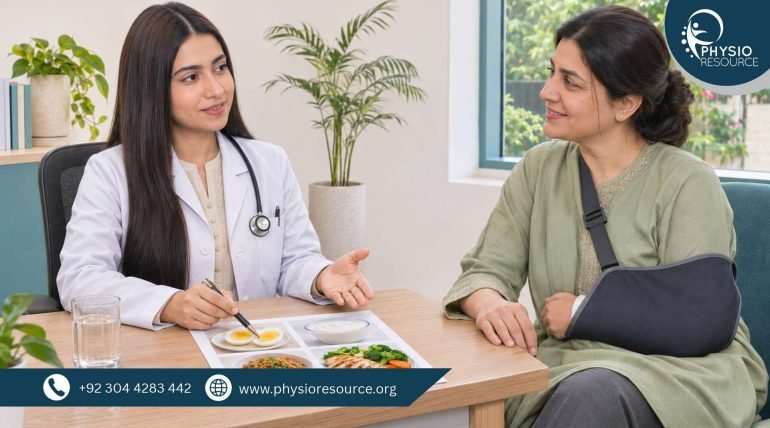
Yes, a qualified dietitian can help you manage your weight while protecting muscle mass during injury recovery. The goal is to support healing, maintain strength and avoid unnecessary weight gain without following an extreme diet.
Why Do You Lose Muscle During Injury Recovery?
When an injury limits movement, the muscles around the affected area may become weaker and smaller. This can happen after:
- Knee ligament injuries or ACL surgery.
- Shoulder injuries and rotator cuff repair.
- Ankle fractures and lower-limb injuries.
- Hip or knee replacement surgery.
- Prolonged bed rest or immobilisation.
Reduced muscle activity contributes to muscle loss. At the same time, your body needs energy and nutrients to repair damaged tissues.
If you eat too little, particularly too little protein and overall energy, you may lose even more muscle and compromise recovery.
You may also like: PCOS Diet Plan for Weight Loss | What to Eat?
How Can a Dietitian Help You Lose Fat Without Losing Muscle?
A personalised nutrition plan considers your injury, activity level, medical history and rehabilitation programme.
1. Adjust your calorie intake carefully
You may need fewer calories when you are less active, but that does not mean you should follow a crash diet. Your body still needs sufficient energy for healing.
2. Include protein in your meals
Protein provides the building blocks needed for muscle maintenance and tissue repair. Useful options include:
- Eggs.
- Chicken and fish.
- Milk, yoghurt and dahi.
- Daal, chickpeas and beans.
- Lean meat in suitable portions.
Your protein requirement depends on your age, body weight, injury and kidney health. A dietitian can help calculate an appropriate amount.
3. Spread protein throughout the day
Instead of eating most of your protein in one meal, include a protein source at breakfast, lunch, dinner and suitable snacks.
For example, eggs at breakfast, daal or chicken at lunch, yoghurt as a snack and fish or another protein source at dinner can help distribute protein intake.
4. Choose balanced meals
Do not eliminate carbohydrates completely. Roti, rice, oats, fruit and vegetables provide energy and important nutrients.
Combine them with protein sources and healthy fats in portions suited to your recovery needs.
5. Coordinate nutrition with physiotherapy
As your physiotherapist gradually introduces strengthening exercises, adequate nutrition helps support the muscles adapting to rehabilitation.
A Simple Pakistani Meal Pattern During Recovery
Here is an example of a balanced daily eating pattern. It is not a personalised calorie or protein prescription.
- Breakfast: Two eggs, whole-wheat roti and plain yoghurt.
- Mid-morning: One seasonal fruit.
- Lunch: Chicken or daal, roti and a serving of vegetables.
- Evening snack: Plain yoghurt, milk or a suitable handful of nuts.
- Dinner: Fish, chicken or beans with vegetables and a moderate portion of rice or roti.
Portions should be adjusted to your appetite, nutritional requirements, medical conditions and activity level.
When Should You See a Dietitian During Injury Recovery?
Consider a dietitian assessment if:
- You are gaining weight because your activity has decreased.
- You notice muscle weakness or loss of muscle size.
- You have undergone orthopaedic surgery.
- You are following a restrictive diet.
- You have diabetes, kidney disease or another condition affecting nutrition.
- You want to return to exercise without unnecessary fat gain.
If you have kidney disease, do not automatically increase protein intake. Your requirements may be different and should be discussed with your healthcare team.
Looking for Nutrition and Rehabilitation Guidance in Lahore?
If you are searching for a dietitian in Lahore, sports nutritionist near me, weight loss diet plan in Lahore or nutrition for injury recovery, look for a professional who understands the relationship between nutrition, muscle preservation and rehabilitation.
At Physio Resource, 93-A1, Gurumangat Road, Gulberg III, Lahore, you can enquire about available physiotherapy and rehabilitation services. Please confirm dietitian consultation availability before booking.
Contact Physio Resource:
Phone: +92 304 4283442
Website: https://physioresource.org/
Remember: the aim during injury recovery is not simply to weigh less. It is to heal well, maintain muscle strength and return to daily activities with confidence.
Frequently Asked Questions
1. Can I lose weight while recovering from an injury?
Yes, but weight loss should be approached carefully. An aggressive calorie deficit may increase muscle loss and interfere with healing.
2. How much protein do I need during injury recovery?
It depends on your body weight, injury, age, activity and health conditions. A dietitian can calculate an appropriate daily target.
3. Will eating more protein prevent muscle loss completely?
No. Protein supports muscle maintenance, but appropriate rehabilitation exercises, sufficient energy and adequate rest are also important.
4. Should I stop eating roti and rice to avoid gaining weight?
Not necessarily. Carbohydrates provide energy. Portion control and balanced meals are generally more useful than eliminating entire food groups.
5. Can physiotherapy help me regain lost muscle?
Yes. A progressive strengthening programme can help rebuild muscle strength and function as your injury heals and your medical team allows activity.
Author
Dr. Ahmed Bilal — Physio Resource
Dr. Ahmed Bilal is the named author of this educational article for Physio Resource. The article provides general health information and does not replace an individual clinical assessment.

