

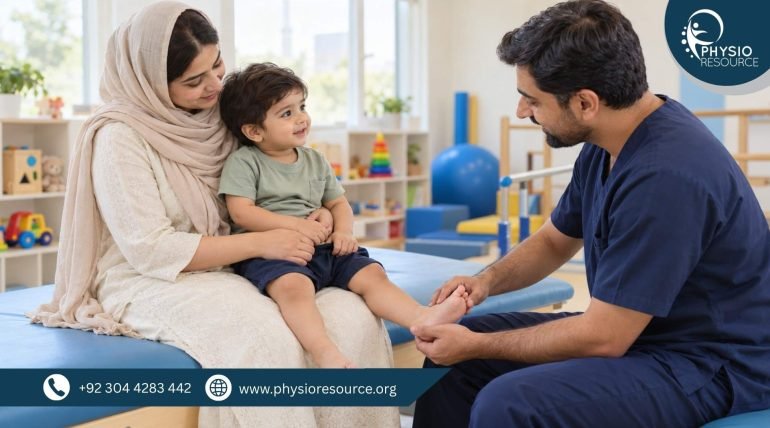
Your baby’s feet look straighter after clubfoot casting. Does that mean treatment is complete? Not yet. One of the most important stages of clubfoot treatment begins when the final cast comes off: maintaining the correction and supporting your child’s future mobility.
At Physio Resource, Gulberg, Lahore, we believe parents should understand what happens after casting, when physiotherapy may be useful, and why follow-up care matters.
What Happens After Clubfoot Casting?
Clubfoot, also called congenital talipes equinovarus (CTEV), is a condition in which a baby’s foot turns inward and downward. The Ponseti method is a widely used treatment involving gentle manipulation and a series of casts to gradually correct the foot position.
After correction, many children need a foot-abduction brace, commonly known as the boots-and-bar brace, to help maintain the corrected position.
The key point: Casting corrects the foot; continued bracing helps prevent it from turning back.
You may also like: Toe Walking in Children: Get Solution
4 Essential Steps After Clubfoot Casting
1. Follow the Prescribed Bracing Schedule
Bracing is the most important part of preventing clubfoot recurrence after successful Ponseti correction. The schedule commonly starts with approximately 23 hours daily for the first three months, followed by nighttime and nap-time use until around four to five years of age, depending on the treating specialist’s protocol.
Never reduce brace-wearing hours or stop using the brace without consulting your child’s clubfoot specialist.
2. Monitor Skin, Fit and Comfort
Check your child’s feet regularly for persistent redness, blisters, swelling or skin breakdown.
The brace should fit correctly without excessive pressure.
If the brace appears too tight, slips, or causes persistent skin problems, contact the treating team promptly. Do not independently alter the brace position or prescribed settings.
3. Encourage Age-Appropriate Movement
Babies should have opportunities for comfortable, age-appropriate movement and play. As your child grows, activities can support general motor development, balance and coordination.
However, clubfoot rehabilitation is not the same for every child. Routine physiotherapy is not generally necessary for every infant during the first year after standard Ponseti treatment.
Your child’s individual needs should guide any additional intervention.
4. Recognise Early Signs of Recurrence
Watch for signs such as the foot turning inward again, the heel appearing tilted, reduced upward movement of the foot, or the child beginning to walk on the outer border of the foot.
If you notice these changes, arrange a prompt review with your clubfoot specialist. Early recurrence may require further casting or other specialist-directed treatment.
When Does a Child Need Physiotherapy After Clubfoot Casting?
Physiotherapy may be considered when a child has specific movement limitations, developmental concerns, residual stiffness, or difficulties with walking and functional activities.
A tailored assessment can help evaluate ankle mobility, muscle function, balance and age-appropriate movement. If additional rehabilitation is indicated, the physiotherapist should coordinate care with the child’s orthopedic or clubfoot treatment team.
Important: Physiotherapy exercises cannot replace the prescribed foot-abduction brace, orthopedic follow-up or repeat casting when medically indicated.
Looking for Pediatric Physiotherapy in Lahore?
If your child has completed clubfoot casting and you are unsure about the next steps, seek guidance from the treating clubfoot specialist before changing the rehabilitation routine.
At Physio Resource, Gulberg III, Lahore, Dr. Ahmad Bilal and the physiotherapy team can discuss your child’s movement-related concerns and whether a physiotherapy assessment may be appropriate.
When searching for the best pediatric physiotherapist in Lahore, the best physiotherapist in Lahore, or a best female physiotherapist, look for verified qualifications, relevant pediatric experience and coordination with specialist medical care.
Whether your family lives in Gulberg, DHA Lahore or Lahore Cantonment, understanding the correct aftercare plan is an important step towards protecting your child’s progress.
Have questions about your child’s movement after clubfoot casting?
i_†˙ Physio Resource: 93-A1, Gurumangat Road, Gulberg III, Lahore, Pakistan
sK! Call: +92 304 4283442
● Website: https://physioresource.org/
Frequently Asked Questions
1. Is physiotherapy necessary after clubfoot casting?
Not for every child. After standard Ponseti treatment, prescribed bracing and orthopedic follow-up are essential. Physiotherapy may be added when individual movement or developmental needs warrant it.
2. How long should my baby wear the clubfoot brace?
A common protocol involves near-full-time use for the first three months, followed by use during sleep and naps until around age four or five. Always follow your child’s specialist’s specific instructions.
3. Can clubfoot return after casting?
Yes. Recurrence can occur, particularly when the brace is not worn as prescribed. Regular follow-up and early attention to changes in foot position are important.
4. When should my child be assessed after clubfoot treatment?
Follow the schedule provided by your clubfoot specialist. Seek an earlier review if the foot turns inward again, movement becomes restricted, or the brace causes persistent skin problems.
5. Where can I discuss pediatric physiotherapy in Lahore?
Contact Physio Resource in Gulberg III at +92 304 4283442 to discuss your child’s movement concerns and appropriate assessment options.

