

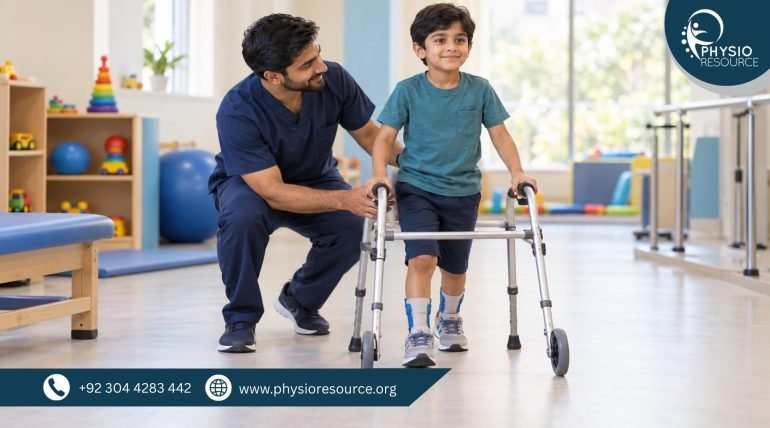
Physiotherapy can help a child with spina bifida become more independent by improving functional strength, balance, posture, joint mobility, transfers, and the ability to move around safely. Although the level of independence varies from child to child, an individualized rehabilitation plan can help children develop practical skills for home, school, and play. For parents seeking spina bifida physiotherapy in Lahore, early assessment and consistent, goal-based support can make an important difference.
What Is Spina Bifida, and How Can It Affect Movement?
Spina bifida is a congenital condition in which the spine and surrounding structures do not develop completely during early pregnancy. Depending on the type and level of the spinal defect, a child may experience leg weakness, reduced sensation, muscle imbalance, joint deformities, or difficulty walking.
Some children walk independently, while others benefit from braces, walkers, crutches, or wheelchairs. Physiotherapy does not repair the spinal defect or restore nerves that have been permanently damaged. Instead, it helps children use their available abilities effectively, prevent avoidable complications, and participate more confidently in everyday life.
You may also like: My Child Has Juvenile Arthritis
10 Ways Physiotherapy Can Improve Independence
- Functional strengthening: Exercises target muscles that can work safely to support posture, transfers, and daily activities.
- Balance training: Age-appropriate activities help children develop stability during sitting, standing, and movement.
- Mobility practice: A physiotherapist teaches suitable movement strategies based on the child’s abilities and safety needs.
- Transfer training: Children can practise moving between a bed, chair, wheelchair, and other surfaces with appropriate assistance.
- Joint mobility: Gentle movement and prescribed stretching help maintain comfortable movement and reduce the risk of contractures.
- Posture management: Appropriate sitting and positioning support comfort, alignment, and participation in school activities.
- Walking practice: Children who are suitable candidates may practise standing and walking with prescribed braces, walkers, or other aids.
- Wheelchair skills: For children who use wheelchairs, training can improve manoeuvring, access, and independence in daily routines.
- Motor-skill development: Play-based activities can help children practise reaching, changing positions, coordination, and age-appropriate functional tasks.
- Parent and caregiver education: Families learn safe handling, positioning, skin-protection routines, and how to support the child’s prescribed home program.
Which Exercises Are Suitable for Children With Spina Bifida?
Exercises must be selected according to the child’s muscle strength, sensation, joint stability, mobility, and medical history. A physiotherapist may prescribe supported sitting and reaching, assisted sit-to-stand practice, gentle range-of-motion exercises, functional transfers, or supported walking when appropriate.
Parents should never force a weak or insensate limb through a stretch or assume that an exercise is safe simply because it does not cause pain. Reduced sensation can prevent a child from noticing pressure, skin injury, or excessive strain. Inspect the skin regularly, use suitable support surfaces, and follow the treating team’s recommendations.
Why Is Early Physiotherapy Important?
Early assessment helps identify movement limitations, muscle imbalances, joint tightness, positioning needs, and opportunities to develop functional skills. Treatment goals should evolve as the child grows, because school access, self-care, mobility equipment, and participation needs may change over time.
Children with spina bifida may also need coordinated care from a pediatrician, neurosurgeon, orthopedic specialist, occupational therapist, and other professionals. Changes in walking ability, new weakness, or worsening bladder or bowel function require prompt medical assessment rather than simply increasing exercise.
Can Children Receive Physiotherapy at Home in Lahore?
Home physiotherapy may be helpful when travelling is difficult or when a child needs support practising everyday activities in their usual environment. A suitable program can include caregiver education, transfer practice, positioning, and exercises prescribed after an individual assessment.
PhysioResource in Gulberg Lahore offers a point of contact for families exploring physiotherapy and rehabilitation options. Parents should confirm the availability of pediatric spina bifida expertise and home visits before booking.
Why Choose PhysioResource?
Choosing physiotherapy should begin with understanding your child’s specific needs, rather than expecting every child to follow the same exercise routine. A carefully planned program
should prioritise safety, achievable functional goals, family education, and regular progress reviews.
At PhysioResource, families can enquire about individualized rehabilitation guidance and suitable physiotherapy services in Gulberg Lahore. The goal is to support each child’s potential for greater participation, confidence, and independence without making unrealistic promises about recovery.
Schedule an appointment: Contact PhysioResource to discuss your child’s mobility, rehabilitation needs, and the most appropriate next steps.
Contact us
Physio Resource
Phone No: 0304-4283442
Address: 93-A1, Gurumangat Road, Gullberg, III Lahore
Frequently Asked Questions
Can physiotherapy help a child with spina bifida walk?
Some children can walk independently or with braces and walking aids, while others may rely on a wheelchair for some or all mobility. Physiotherapy helps develop the safest and most practical mobility options based on neurological function and physical assessment.
At what age should physiotherapy begin?
Assessment and developmental support should begin early, ideally as part of the child’s multidisciplinary care plan. The timing and frequency of treatment depend on the child’s condition, developmental stage, surgery history, and individual goals.
Can physiotherapy cure spina bifida?
No. Physiotherapy cannot reverse the spinal defect or repair permanently damaged nerves. It can, however, help improve functional skills, maintain joint movement, support safe mobility, and reduce preventable complications.
What exercises should parents do at home?
Home exercises should be prescribed individually by a qualified physiotherapist. Supported sitting, appropriate range-of-motion activities, and functional movement practice may be suitable for some children, but exercises must account for reduced sensation, joint stability, and skin-protection needs.
Is pediatric physiotherapy available in Gulberg Lahore?
PhysioResource is located in Gulberg III, Lahore. Contact the clinic to confirm pediatric rehabilitation availability, relevant clinical experience, and whether the team can support your child’s specific needs.
Is home physiotherapy suitable for a child with spina bifida?
It may be appropriate for children who need help practising transfers, positioning, or daily mobility at home. Suitability depends on the child’s needs, equipment, safety requirements, and access to coordinated medical care.
About the Author
Dr. Ahmad Bilal, DPT
Doctor of Physical Therapy | Rehabilitation and Movement Health
Dr. Ahmad Bilal is the named author of this educational article on pediatric rehabilitation. Before publication, add his verified clinical credentials, relevant pediatric rehabilitation experience, and professional profile to demonstrate expertise and help families make informed decisions.
Medical review: Pediatric rehabilitation content should be reviewed by a clinician experienced in spina bifida care before publication.
Last updated: October 2026.

