

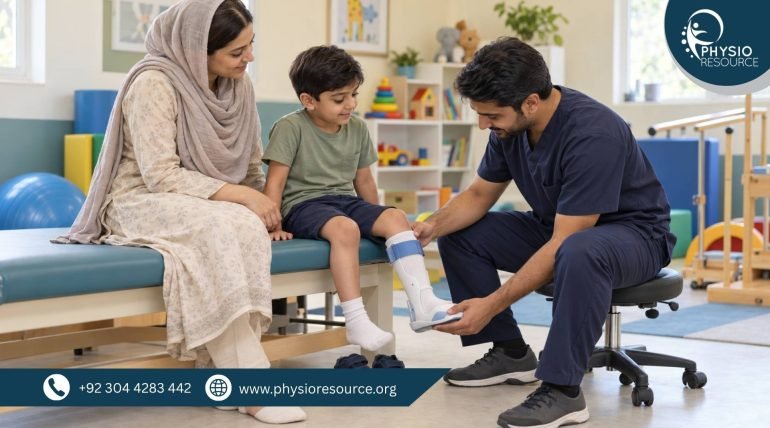
How Can a Physiotherapy Assessment Help?
Not every child with cerebral palsy needs leg braces, but the right brace can improve foot positioning, walking stability, and functional mobility when prescribed for a specific need. A pediatric physiotherapy assessment helps identify problems with balance, muscle tone, ankle movement, and walking patterns to determine whether an ankle-foot orthosis (AFO) or another support may help. For parents seeking pediatric physiotherapy in Gulberg Lahore, an individualized assessment is the best starting point.
Why Might a Child With Cerebral Palsy Need Leg Braces?
Cerebral palsy affects movement and posture, and its effects vary considerably between children. Some children walk independently but struggle with toe walking or ankle instability. Others may have difficulty clearing their feet while walking, keeping their knees aligned, or standing comfortably.
Leg braces, medically known as orthoses, are designed to support specific movement goals. An ankle-foot orthosis (AFO) supports the foot and ankle, while other orthoses may be considered for different needs. The correct choice depends on the child’s muscle control, joint flexibility, walking ability, and treatment goals.
Braces do not cure cerebral palsy or guarantee independent walking. Their purpose is to improve function where appropriate.
5 Signs Your Child May Benefit From a Brace Assessment
A physiotherapist or pediatric rehabilitation specialist may recommend an assessment if your child:
- Frequently walks on their toes.
- Has difficulty keeping the foot flat during standing or walking.
- Trips frequently or struggles to clear the foot from the floor.
- Shows ankle instability or difficulty maintaining balance.
- Has limited ankle movement or developing muscle tightness.
These signs do not automatically mean a brace is required. A detailed assessment is needed to identify the cause and select the safest approach.
How Can a Physiotherapy Assessment Help?
A thorough assessment looks beyond the position of the foot. It considers how the child’s entire body moves and how the movement problem affects everyday activities.
The assessment may include:
- Muscle tone and strength: Identifying increased stiffness, weakness, or difficulty controlling movement.
- Joint range of motion: Checking ankle flexibility and whether fixed tightness limits movement.
- Walking analysis: Observing foot contact, knee position, balance, and walking efficiency.
- Functional mobility: Assessing standing, transfers, stairs, and age-appropriate activities.
- Footwear and brace review: Checking existing equipment for fit, comfort, and suitability.
- Family goals: Understanding whether the priority is safer walking, improved standing, reduced discomfort, or easier daily care.
These findings help the clinical team decide whether braces, physiotherapy, other interventions, or a combination may be appropriate.
Which Leg Braces Are Used for Cerebral Palsy?
Ankle-foot orthosis (AFO): Supports the ankle and foot and may help improve alignment and walking mechanics.
Solid AFO: Restricts ankle movement more than a hinged design and may be considered when greater control is needed.
Hinged AFO: Allows selected ankle movement when the child’s knee and hip control and clinical presentation make this appropriate.
Ground-reaction AFO: May help selected children with crouched walking when joint range and other clinical factors are suitable.
The choice must be made individually, usually with input from a physiotherapist and a qualified orthotist. A brace that helps one child may not suit another.
Can Physiotherapy Help Without Braces?
Yes. Physiotherapy remains important whether or not a child uses orthoses. A personalized program may include task-specific walking practice, balance activities, functional strengthening, prescribed stretching, posture management, and caregiver education.
Exercises should support meaningful goals, such as getting up from a chair, walking safely, playing, or participating at school. Stretching alone cannot correct every walking problem, particularly when a fixed contracture or significant bone or joint deformity is present.
How Can Parents Keep Braces Safe?
- Follow the prescribed wearing schedule.
- Check the skin regularly, especially around the heel, ankle, and bony areas.
- Ensure the brace fits properly with suitable footwear.
- Contact the treating team if the brace causes persistent pain, rubbing, swelling, or skin damage.
- Arrange reviews as your child grows or their movement changes.
Do not force a brace onto a painful or swollen limb, and do not change its fit yourself. Persistent redness, blistering, or broken skin needs prompt clinical advice.
Pediatric Physiotherapy in Gulberg Lahore
Choosing the right treatment starts with understanding your child’s needs—not simply purchasing a brace. PhysioResource in Gulberg III, Lahore, can be contacted to enquire about pediatric physiotherapy assessments and rehabilitation options. Confirm the clinic’s relevant pediatric experience and orthotic assessment or referral arrangements before booking.
Schedule an appointment with PhysioResource to discuss your child’s walking pattern, balance, foot position, and rehabilitation goals. An individualized assessment can help your family make informed decisions about braces and physiotherapy.
Contact us
Physio Resource
Phone No: 0304-4283442
Address: 93-A1, Gurumangat Road, Gullberg, III Lahore
Frequently Asked Questions
Does every child with cerebral palsy need leg braces?
No. Some children walk comfortably without braces, while others benefit from orthoses to support specific movement goals. The decision depends on the child’s function, muscle tone, joint flexibility, and walking pattern.
Can leg braces help my child walk better?
They may improve foot positioning, stability, or walking efficiency in appropriately selected children. The outcome depends on the child’s needs, brace design, fit, and rehabilitation program.
Can my child wear braces all day?
Not automatically. Wearing time depends on the type of brace and its purpose. Follow the prescribed schedule and seek advice if your child develops pain, persistent redness, or skin irritation.
Does physiotherapy still matter if my child already wears braces?
Yes. Braces provide mechanical support, while physiotherapy works on functional movement, strength where appropriate, balance, mobility, and everyday skills. Both should be reviewed as the child develops.
Where can I enquire about pediatric physiotherapy in Gulberg Lahore?
You can contact PhysioResource in Gulberg III, Lahore, to ask about pediatric physiotherapy availability and whether an assessment or referral for orthotic fitting is appropriate for your child.
About the Author
Dr. Ahmad Bilal, DPT
Doctor of Physical Therapy | Rehabilitation and Movement Health
Dr. Ahmad Bilal is the named author of this educational article about cerebral palsy, mobility, and rehabilitation. Add his verified qualifications, relevant pediatric rehabilitation experience, and professional profile before publication so parents can assess his expertise.
Clinical review: This article should be reviewed by a clinician experienced in pediatric cerebral palsy and orthotic management before publication.
Last updated: October 2026.

