

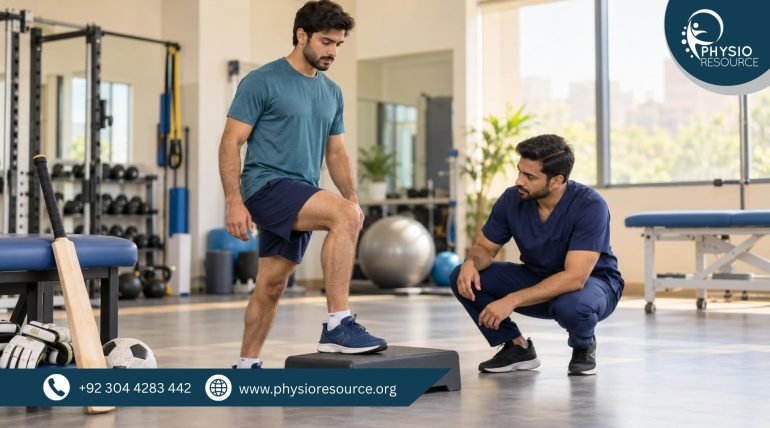
Missing cricket matches or football games after ACL surgery can be frustrating. You may be walking comfortably and even jogging again, but running straight is not the same as sprinting, stopping suddenly, landing, or changing direction under pressure. These demanding movements place much greater stress on your knee. Returning too early can put your reconstructed ligament at risk, so your recovery should be guided by functional progress—not just the number of months since surgery.
How Long Does It Take to Return to Cricket or Football?
Many athletes need around 9–12 months after ACL reconstruction before returning to competitive sports involving rapid turns, pivots, and sudden changes of direction. Some need longer, depending on their recovery, the type of surgery, any additional injuries, and the demands of their sport.
| Recovery milestone | What it involves |
| Early rehabilitation | Managing swelling, restoring knee movement, and activating muscles as advised |
| Strength and balance | Building quadriceps, hamstring, calf, and hip strength |
| Running progression | Gradually increasing running speed and duration when cleared |
| Sport-specific drills | Practising acceleration, deceleration, jumping, landing, and direction changes |
| Team training and competition | Progressing from controlled practice to unrestricted play after medical clearance |
These are general stages, not a fixed timetable. Your surgeon and rehabilitation team should guide your progression.
Is Returning to Cricket Different From Returning to Football?
Yes. Both sports require knee control, but their demands vary by position and playing style.
For cricket, rehabilitation may eventually include controlled running between wickets, acceleration and deceleration, fielding drills, throwing while moving, and—where relevant—bowling or batting movements. Fast bowlers may have additional demands because of repeated high-load movements and landing.
For football, preparation usually needs to include sprinting, rapid stopping, cutting, pivoting, jumping, landing, and reacting to opponents. These movements must be practised progressively before unrestricted matches.
In either sport, being able to jog comfortably does not automatically mean your knee is ready for competition.
You may also read: Why Pain Keeps Coming Back After Treatment? – All you need to know
What Must You Be Able to Do Before Returning?
A safe return-to-sport assessment may include:
- Minimal or no pain and swelling, with full knee movement.
- Adequate knee stability, assessed by an appropriate clinician.
- Strong quadriceps and hamstrings, measured objectively where possible.
- Single-leg hop and jump testing, including the quality of landing.
- Good balance and movement control during acceleration, deceleration, and direction changes.
- Psychological readiness, including confidence when performing sport-specific movements.
- Completion of progressive sport-specific training without a concerning reaction from the knee.
Strength and hop-test symmetry are useful, but no single score guarantees that reinjury will not occur. Your overall performance, surgical details, and sport demands must also be considered.
How Can Physiotherapy Help After ACL Surgery?
A structured rehabilitation programme helps athletes rebuild strength, coordination, balance, and the ability to tolerate progressively demanding activities.
Depending on your stage of recovery and your surgeon’s instructions, rehabilitation may include:
- Knee range-of-motion exercises and swelling management.
- Progressive quadriceps, hamstring, hip, and calf strengthening.
- Balance and neuromuscular-control exercises.
- Running, jumping, and landing progression when appropriate.
- Sport-specific drills and a gradual return to team training.
- Functional testing to help guide decisions about progression.
Rehabilitation should be individualised, particularly if your ACL injury also involved a meniscus injury or another procedure. Do not begin sprinting, pivoting drills, or match play simply because you have reached a particular month after surgery.
Get Treated: Sports Injury Therapy in Lahore – Book Now
ACL Rehabilitation in Lahore: When Should You Book an Assessment?
If you have undergone ACL reconstruction and want to return to cricket or football, a physiotherapy assessment can help identify strength deficits, movement limitations, and areas that need further work.
At Physio Resource, Gulberg III, Lahore, you can enquire about physiotherapy assessment and rehabilitation planning. Your return-to-sport decision should involve your treating surgeon and rehabilitation team, with medical clearance before unrestricted competition.
Contact us
Physio Resource
Phone No: 0304-4283442
Address: 93-A1, Gurumangat Road, Gullberg, III Lahore
Frequently Asked Questions
1. Can I play football six months after ACL surgery?
Six months is too early for many athletes to return to unrestricted football. Football involves rapid changes of direction and pivoting. Progress should depend on healing, functional testing, sport-specific preparation, and professional clearance.
2. Can I return to cricket after nine months?
Some athletes may be ready to begin a graded return around this time, while others need longer. Readiness depends on your knee function, strength, sport-specific demands, and assessment results—not time alone.
3. Is jogging enough to prove my ACL has recovered?
No. Jogging does not adequately test the cutting, pivoting, jumping, and reactive movements required in cricket and football. More comprehensive testing is needed.
4. What happens if I return to sport too early?
Returning before adequate recovery may increase the risk of another ACL injury or other knee problems. A structured progression can help assess readiness, although no rehabilitation programme can eliminate injury risk completely.
5. Do I need physiotherapy after ACL reconstruction?
Rehabilitation is a key part of recovery after ACL reconstruction. An individualised programme helps restore movement, strength, and sport-specific function, while progress should follow your surgeon’s precautions and your response to training.
Author
Dr. Ahmed Bilal — Physiotherapist, Physio Resource
Dr. Ahmed Bilal is the author of this educational article. The information is intended for general awareness and does not replace an individual clinical assessment. Add verified professional qualifications, registration details, relevant certifications, and clinical experience to the author profile before publication.

