

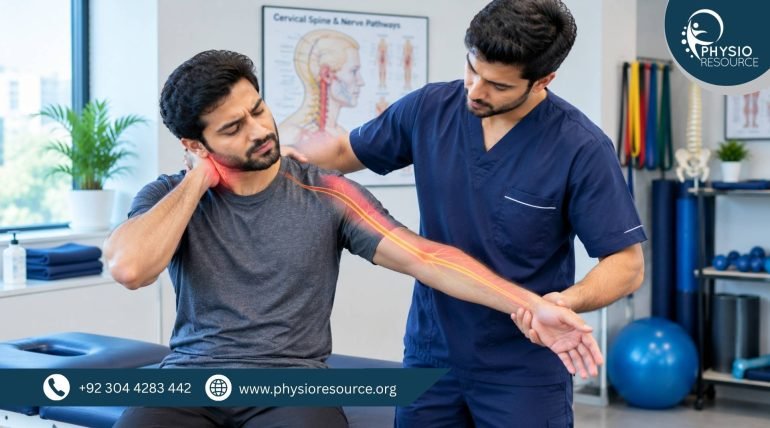
Could It Be a Pinched Nerve?
If you have neck pain with tingling, pins and needles, numbness or weakness in your arm or hand, a nerve in the neck may be irritated or compressed. This is sometimes called a pinched nerve or cervical radiculopathy. However, similar symptoms can come from other conditions, so proper assessment is important.
At Physio Resource in Gulberg, Lahore, physiotherapy assessment can help identify possible causes of neck and arm symptoms and determine whether a personalized rehabilitation programme may be appropriate.
What Is a Pinched Nerve in the Neck?
Several nerves that supply the shoulders, arms and hands originate from the cervical spine, which is the neck portion of the spine.
If a nerve root becomes irritated or compressed, symptoms may travel away from the neck and into the:
- Shoulder
- Upper arm
- Forearm
- Wrist
- Hand
- Fingers
This can cause symptoms such as pain, tingling, numbness or weakness.
The symptoms may occur continuously or may become more noticeable with certain neck positions or activities.
Also, read: Fix Tech Neck Fast in Lahore: Neck Pain Relief for IT Workers
What Does Cervical Radiculopathy Feel Like?
Cervical nerve irritation can produce symptoms that feel different from ordinary muscle pain. You may experience:
- Neck pain
- Pain travelling into the shoulder or arm
- Tingling or pins and needles
- Numbness in part of the arm or hand
- Burning or electric-like sensations
- Weakness in certain arm or hand movements
The exact pattern can vary depending on which nerve is affected.
For example, one person may notice symptoms mainly in the shoulder and upper arm, while another may experience tingling extending into particular fingers.
Does Arm Tingling Always Mean a Pinched Nerve?
No.
Arm tingling or numbness can have several possible causes. These may include:
- Nerve irritation from the neck
- Nerve compression around the shoulder, elbow or wrist
- Certain musculoskeletal conditions
- Peripheral nerve problems
- Circulation-related problems
- Other neurological or medical conditions
This is why simply searching for symptoms online cannot provide a reliable diagnosis.
A physiotherapist or doctor can assess the distribution of symptoms, movement, strength, sensation and other relevant findings to determine what may need further investigation.
What Can Cause a Pinched Nerve in the Neck?
Possible causes include changes affecting the structures of the cervical spine. These may include:
Disc Problems
A disc between the vertebrae can sometimes bulge or herniate and irritate a nearby nerve.
Age-Related Changes
Changes in the joints and other structures of the spine can sometimes reduce the available space around a nerve.
Neck Injury
A sudden injury or trauma may affect the structures around the cervical spine.
Repetitive Strain
Certain work, sporting or everyday activities may repeatedly place stress on the neck and upper body.
However, the cause cannot be determined from symptoms alone.
Can Physiotherapy Help a Pinched Nerve?
For appropriate patients, physiotherapy may be part of conservative management for cervical radiculopathy and other neck-related conditions.
Your physiotherapist may assess:
- Neck movement
- Shoulder movement
- Arm and hand strength
- Sensation
- Reflexes when appropriate
- Posture and movement patterns
- Symptoms during different positions
- Functional activities
- Work and exercise demands
Depending on the findings, treatment may include:
- Therapeutic exercises
- Neck and upper-body mobility exercises
- Strengthening
- Postural and movement education
- Activity modification
- Manual therapy when appropriate
- Gradual return to normal activities
- Home exercise programme
The goal is not simply to massage the painful area. Rehabilitation aims to improve movement, physical capacity and function while helping you manage symptoms appropriately.
What Can You Do at Home?
If your symptoms are mild and there are no warning signs, some general strategies may help:
- Avoid staying in one position for long periods.
- Take regular movement breaks if you work at a desk.
- Keep frequently used items within comfortable reach.
- Avoid repeatedly working in positions that clearly aggravate your symptoms.
- Follow exercises recommended specifically for your condition.
- Gradually return to normal activity rather than avoiding movement completely.
Avoid aggressive neck stretching or forceful neck manipulation when you have unexplained numbness, tingling or weakness.
When Should You See a Physiotherapist?
You should consider professional assessment if:
- Neck pain repeatedly travels into your arm.
- Tingling or numbness persists.
- Symptoms are affecting your sleep or daily activities.
- You notice weakness in the arm or hand.
- Symptoms are getting worse.
- You are struggling to work, exercise or perform normal activities.
- Symptoms continue despite modifying aggravating activities.
An assessment can help determine whether the symptoms appear musculoskeletal, nerve-related or require further medical investigation.
When Is Neck and Arm Numbness an Emergency?
Most neck and arm symptoms are not emergencies, but certain symptoms require urgent medical attention.
Seek urgent medical care if numbness or weakness develops suddenly, particularly if it occurs with:
- Facial drooping
- Difficulty speaking
- Severe dizziness
- Loss of balance
- Sudden severe headache
- Chest pain or pressure
- Significant difficulty breathing
Urgent assessment is also important after major trauma or if you develop rapidly worsening weakness or other significant neurological symptoms.
Can a Pinched Nerve Heal Without Surgery?
Many people with cervical radiculopathy can improve with conservative management, depending on the underlying cause and severity.
Treatment may involve physiotherapy, activity modification, medication prescribed by a doctor, or other medical management.
Surgery is not automatically required simply because a nerve is irritated. However, persistent or progressive neurological problems may require further medical evaluation.
Get Solution in Lahore: Best Neck Pain Treatment in Lahore
Why Choose Physio Resource?
At Physio Resource, neck and arm symptoms are assessed rather than automatically labelled as a pinched nerve.
If you are searching for the best physiotherapist in Lahore, look for a clinician who takes time to understand your symptoms, examines your movement and neurological function where appropriate, and develops treatment around your individual needs.
Patients looking for a best male physiotherapist or best female physiotherapist can discuss their preference when booking an assessment.
Physio Resource also provides pediatric rehabilitation. Parents searching for a best child specialist physiotherapist should remember that children’s neurological and musculoskeletal symptoms require an age-appropriate assessment and treatment approach.
Schedule an Appointment
Neck pain accompanied by tingling or numbness should not simply be ignored or assumed to be a muscle problem.
At Physio Resource in Gulberg, Lahore, our physiotherapy team can assess your neck, arm symptoms, movement and functional limitations and help determine an appropriate rehabilitation approach.
Schedule an appointment today and get your symptoms properly assessed rather than guessing at the cause.
Contact us
Physio Resource
Phone No: 0304-4283442
Address: 93-A1, Gurumangat Road, Gullberg, III Lahore
Frequently Asked Questions
Can a pinched nerve cause numbness in the fingers?
Yes. Cervical nerve irritation can cause numbness or tingling that extends into parts of the hand or fingers. The specific pattern may provide useful clinical information.
Should I massage my neck if my arm is numb?
It is better to understand the cause first. Gentle treatment may be appropriate for some muscular neck problems, but unexplained numbness or weakness should be assessed before using aggressive massage or manipulation.
Can physiotherapy fix a pinched nerve?
Physiotherapy may help manage symptoms and improve movement, strength and function in appropriate cases. The outcome depends on the underlying cause and severity.
How long does a pinched nerve in the neck take to improve?
Recovery varies significantly. Some people improve within a relatively short period, while others with more persistent nerve irritation may require longer rehabilitation and medical follow-up.
When should I worry about arm numbness?
Sudden numbness, significant or rapidly worsening weakness, symptoms following major trauma, or numbness accompanied by signs such as facial drooping, speech difficulty or chest pain requires urgent medical assessment.

