
The hospital treatment is over, but your recovery is not.
You may have survived Guillain-Barré Syndrome (GBS), yet still struggle to stand, walk, climb stairs or even hold everyday objects. Your family may be asking the same question: Why am I still so weak, and when will I become normal again?
Here is something important to understand: GBS recovery does not end when you leave the hospital. Rehabilitation is an important part of the journey back to movement, strength and independence.
If you or someone in your family is searching for Guillain-Barré Syndrome rehabilitation in Lahore, neurological physiotherapy, GBS recovery exercises or a physiotherapist near me, knowing when and how to begin rehabilitation can make a real difference.
When Should Physiotherapy Start After GBS?
One of the biggest misconceptions is that patients must wait until they regain their strength before starting physiotherapy.
In fact, rehabilitation can begin during the hospital phase, under the supervision of the medical and rehabilitation team. The treatment must be adjusted to the patient’s medical stability, weakness and ability to participate.
After the acute phase, when the patient’s condition is stable, a structured rehabilitation programme can help address remaining weakness, stiffness, reduced mobility and difficulty performing daily activities.
You do not need to wait until you can walk independently to ask about rehabilitation.
The right starting point depends on your medical condition and current abilities.
Also read: Rehabilitation Is Not a Quick Fix: Why Physiotherapy Takes Time
Why Does Weakness Continue After Guillain-Barré Syndrome?
GBS is an immune-mediated condition in which the body’s immune system attacks peripheral nerves. These nerves help control muscle movement and sensation.
Even after the acute illness has been treated, nerve recovery can take time. Some patients experience:
- Weakness in the arms, legs or hands.
- Difficulty standing up or walking independently.
- Poor balance and frequent fear of falling.
- Tingling, numbness or nerve-related pain.
- Severe tiredness after small activities.
- Difficulty climbing stairs or managing everyday tasks.
Some people recover relatively quickly, while others need months or longer. Progress is different for every patient.
How Does Neurological Physiotherapy Help GBS Patients?
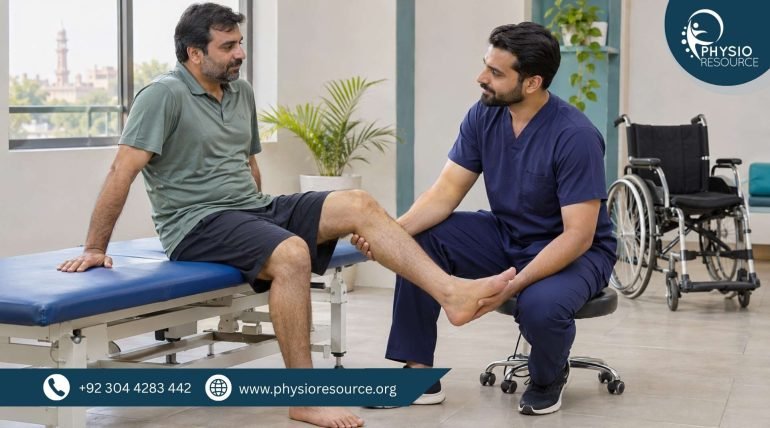
A personalised Guillain-Barré Syndrome physiotherapy programme focuses on restoring function safely rather than simply making muscles tired.
Depending on the patient’s condition, rehabilitation may include:
- Muscle activation and strengthening: Carefully selected exercises help patients regain control and strength as nerve function recovers.
- Bed mobility and transfers: Learning to turn in bed, sit up, stand and move safely between a bed and chair.
- Balance and walking training: Gradual practice can help patients improve stability, walking confidence and independence.
- Joint movement and flexibility: Appropriate movement helps maintain joint mobility and reduce stiffness during periods of weakness.
- Fatigue management: Activity and rest need to be balanced. Excessive exercise can worsen fatigue, so rehabilitation intensity should be monitored and progressed carefully.
For patients with significant weakness, treatment may also involve occupational therapy, mobility aids, orthotic support or other rehabilitation services.
Can a GBS Patient Walk Again?
This is often the question families want answered most.
Many people with Guillain-Barré Syndrome regain the ability to walk, but recovery varies according to the severity of the illness, complications, age and individual nerve recovery.
Some patients first need help sitting and standing. Others may be able to walk short distances but struggle with stairs, balance or fatigue.
The goal of rehabilitation is to improve what the patient can safely do today while gradually working towards greater independence. No responsible physiotherapist should promise a fixed recovery time.
Looking for GBS Rehabilitation in Lahore?
Families searching for the best physiotherapy clinic in Lahore, neurological rehabilitation in Lahore, a GBS physiotherapist near me or a rehabilitation centre in Lahore need more than a routine exercise programme. They need an approach that considers the patient’s medical history, present strength, fatigue and daily functional needs.
At Physio Resource, Gulberg III, Lahore, patients and families can enquire about physiotherapy and rehabilitation services.
Whether you are searching from Gulberg, DHA, Johar Town, Faisal Town, Walton or Lahore Cantt, contact the clinic to confirm appointment and relevant neurological rehabilitation service availability.
Do not measure recovery only by how far you can walk today. The small steps—sitting independently, standing safely and taking your first supported steps—matter too.
Contact Physio Resource to discuss an assessment and the next appropriate step in your rehabilitation.
Contact us
Phone No: 0304-4283442
Physio Resource
Address: 93-A1, Gurumangat Road, Gullberg, III Lahore
Frequently Asked Questions
1. When should physiotherapy start after Guillain-Barré Syndrome?
Rehabilitation may begin during hospital admission under medical supervision. A structured programme should continue as the patient’s condition stabilises and abilities improve.
2. How long does GBS rehabilitation take?
There is no fixed timeline. Some patients recover over months, while others need longer-term rehabilitation for weakness, fatigue or walking difficulties.
3. Can physiotherapy help a patient who cannot walk after GBS?
Yes. Rehabilitation can address positioning, joint movement, muscle activation, transfers and gradual mobility, even before independent walking becomes possible.
4. Can too much exercise be harmful after GBS?
Excessive exercise can increase fatigue and interfere with recovery. Exercise intensity, repetitions and rest periods should be adjusted to the patient’s response.
5. Where can I find neurological physiotherapy for GBS in Lahore?
Contact a physiotherapy and rehabilitation provider to confirm experience, assessment arrangements and availability of neurological rehabilitation services.
About the Author
Dr. Ahmed Bilal — Physio Resource
Dr. Ahmed Bilal is the named author of this educational article for Physio Resource. The article provides general health information and does not replace an individual clinical assessment.

