

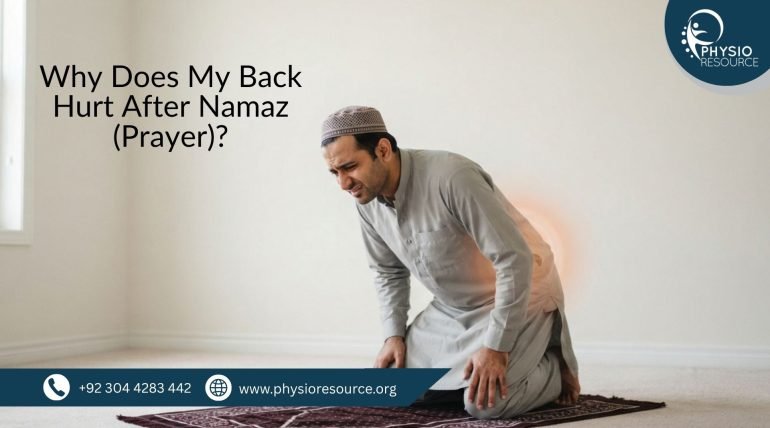
Causes, Treatment & How to Pray Comfortably Again
If you experience back pain after Namaz (prayer), you’re not alone. Pain during or after Salah is not a normal part of prayer. It is often a sign of an underlying issue such as poor posture, muscle weakness, joint stiffness, arthritis, or a pre-existing spinal condition. The good news is that, in most cases, physiotherapy can help reduce pain, improve flexibility, and allow you to perform Namaz more comfortably.
At Physio Resource in Gulberg, Lahore, our experienced rehabilitation team provides evidence-based treatment to help patients move with confidence while respecting their daily lifestyle and religious practices.
Why Does My Back Hurt During or After Namaz?
Namaz involves standing, bowing (Ruku), prostration (Sujood), and sitting (Jalsa). These repeated movements require good flexibility, joint mobility, and core muscle strength. If your muscles or joints are stiff, weak, or inflamed, these positions may place extra stress on your back.
Pain can occur in the lower back, middle back, or even the neck, depending on the underlying condition.
If you’re searching for the Best Physiotherapist in Lahore, a detailed assessment can help identify the exact cause of your pain and provide the right treatment.
You may also like: How to Avoid Pain During Prayer
Common Causes of Back Pain After Prayer
Several conditions may contribute to pain during Namaz, including:
- Poor posture
- Weak core muscles
- Muscle tightness
- Lumbar spondylosis
- Herniated (slipped) disc
- Sciatica
- Arthritis of the spine
- Prolonged sitting during work
- Previous back injury
Because each condition is different, it’s important to treat the cause rather than simply masking the pain with medication.
Warning Signs You Shouldn’t Ignore
Seek professional advice if you experience:
- Back pain after every prayer
- Pain that radiates into your hips or legs
- Numbness or tingling in your legs
- Difficulty standing up after Sujood
- Persistent stiffness in the morning
- Pain that lasts for several weeks
Early treatment can help prevent long-term spinal problems and improve your quality of life.
Families often visit the Best Child Specialist in Lahore for their children’s health, but adults should also prioritize their own musculoskeletal health to continue performing daily activities, including prayer, comfortably.
Can Physiotherapy Help?
Yes. Physiotherapy is one of the most effective treatments for back pain caused by posture problems, muscle weakness, and many spinal conditions.
At Physio Resource, your personalized treatment plan may include:
- Comprehensive spine assessment
- Pain-relieving techniques
- Core strengthening exercises
- Stretching for tight muscles
- Posture correction
- Mobility and flexibility exercises
- Ergonomic and lifestyle advice
- Personalized home exercise program
If you’re looking for the Best Female Physiotherapist in Lahore, our experienced team also provides individualized care for women experiencing back pain related to pregnancy, childbirth, or daily household activities.
Tips to Reduce Back Pain During Namaz
These simple habits may help you pray more comfortably:
- Perform gentle back stretches before prayer if recommended by your physiotherapist.
- Strengthen your core muscles with regular exercises.
- Avoid sitting for long hours without movement.
- Maintain a healthy body weight.
- Use proper movement techniques when transitioning between prayer positions.
- Wear supportive footwear when walking to and from the mosque if appropriate.
- Seek professional advice if pain continues instead of relying only on painkillers.
With the right treatment and exercises, many people return to praying without discomfort.
Why Choose Physio Resource?
At Physio Resource, we believe rehabilitation should help you return to the activities that matter most—including prayer, work, and family life. Our experienced team provides personalized, evidence-based physiotherapy for back pain, posture-related problems, arthritis, and neurological conditions. Conveniently located in Gulberg, Lahore, we are committed to helping every patient achieve long-term recovery. This article is clinically reviewed by Dr. Ahmed Bilal, an experienced rehabilitation expert dedicated to delivering high-quality patient care.
Schedule an Appointment
If back pain is making it difficult to perform Namaz comfortably, don’t ignore it. Early assessment and the right rehabilitation plan can help relieve pain, improve flexibility, and restore your confidence in daily movement.
Schedule an appointment today at Physio Resource in Gulberg, Lahore, and let our experienced rehabilitation team help you perform Namaz comfortably and live an active, pain-free life.
Contact us
Physio Resource
Phone No: 0304-4283442
Address: 93-A1, Gurumangat Road, Gullberg, III Lahore
Frequently Asked Questions (FAQs)
1. Is it normal to have back pain after Namaz?
No. Occasional discomfort may happen after unusual activity, but persistent back pain during or after Namaz is not considered normal and should be assessed.
2. Can physiotherapy help reduce back pain during prayer?
Yes. Physiotherapy can improve flexibility, posture, muscle strength, and spinal mobility, making prayer movements more comfortable.
3. Should I stop praying if my back hurts?
If your pain is severe or persistent, consult your healthcare provider. Many people can continue praying with appropriate medical advice, treatment, or temporary modifications based on their condition.
4. What exercises help prevent back pain during Namaz?
Core strengthening, gentle back stretches, hip mobility exercises, and posture training are commonly recommended. These should ideally be prescribed after an individual assessment.
5. Where can I find the Best Physiotherapist in Lahore for back pain treatment?
Physio Resource in Gulberg, Lahore offers evidence-based physiotherapy for back pain, posture correction, and spinal rehabilitation, with individualized care under the clinical guidance of Dr. Ahmed Bilal.

