

When I Sprint, and Do I Need Sports Physiotherapy?
A hamstring strain that repeatedly returns during sprinting may mean your muscle has not regained sufficient strength, load tolerance, or high-speed running capacity. Sports physiotherapy in Lahore can help identify contributing factors and guide progressive rehabilitation. The goal is not simply to become pain-free, but to rebuild the strength and sprinting capacity needed to return to sport safely.
Why Does a Hamstring Strain Keep Coming Back?
The hamstrings are muscles at the back of your thigh that help bend your knee and extend your hip. During sprinting, they work hard to control your lower leg as it swings forward and produce force during running.
Recurrent injuries can occur when you resume full-speed training before rebuilding adequate strength and running tolerance. Other contributing factors include:
- Returning to sprinting too quickly after injury.
- Persistent hamstring weakness, particularly during muscle lengthening.
- Sudden increases in training intensity or running volume.
- Previous hamstring injuries, fatigue, and inadequate recovery.
- Insufficient preparation for acceleration and maximum-speed running.
Repeated pain does not necessarily indicate a severe tear, but it deserves assessment rather than repeated rest alone.
Do You Need Sports Physiotherapy?
If your hamstring pain returns whenever you sprint, accelerate, kick, or change direction, a physiotherapy assessment can help identify the problem.
Assessment may include your injury history, pain location, hip and knee movement, hamstring strength, functional tasks, and running progression. A physiotherapist should also consider other causes of posterior thigh pain, including referred pain from the lower back or sciatic nerve irritation.
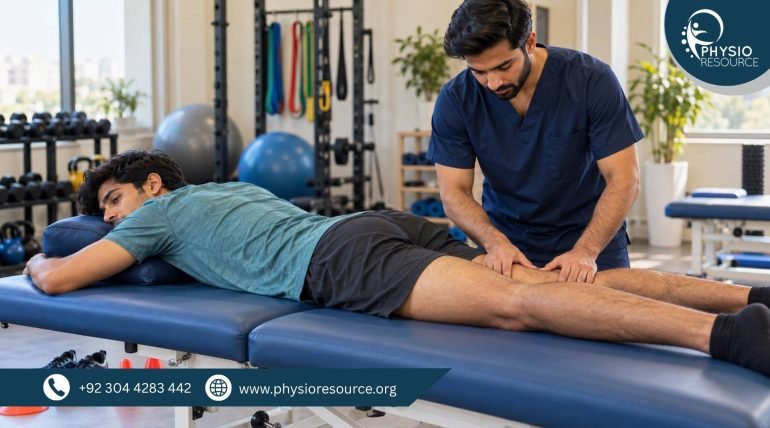
Treatment may involve progressive strengthening, load management, movement training, and sport-specific rehabilitation. Manual therapy may help manage symptoms in selected cases, but it should complement rather than replace exercise-based rehabilitation. Imaging is not required for every strain; a doctor can determine whether further investigation is appropriate.
Five Practical Steps to Support Recovery
These home strategies are general educational guidance, not a personalised rehabilitation plan. Begin only with activities your symptoms tolerate.
- Gentle walking: Take short walks at a comfortable pace without limping. Gradually increase the distance if symptoms remain stable. Stop if pain worsens.
- Isometric hamstring contractions: Lie on your back with your knees bent and gently press your heel into the floor without moving your leg. Hold for 5–10 seconds and repeat 5–10 times if comfortable. Avoid forceful contractions during an acute, painful injury.
- Glute bridges: Lie on your back with your knees bent and lift your hips in a controlled movement. Try 1–2 sets of 8–12 repetitions if comfortable. Stop if pain increases or the hamstring cramps.
- Progressive hamstring strengthening: When basic movements are comfortable, introduce controlled hamstring curls or hip-hinge exercises with manageable resistance. Increase the load gradually according to symptoms and strength.
- Graded return to running: Once walking and strengthening are tolerated, gradually progress from jogging to faster running, accelerations, and eventually sprinting. Do not return directly to maximum speed.
Exercise selection and progression should be adapted to injury severity, recovery stage, and individual assessment findings.
When Can You Sprint Again?
Being pain-free at rest is not enough. Before returning to unrestricted sprinting, you should tolerate progressively faster running, accelerate without symptoms, and demonstrate appropriate strength and functional control.
Sports physiotherapy can help guide return-to-sport decisions using strength comparisons, running drills, and sport-specific tasks. No single test guarantees that reinjury will not occur; fatigue, confidence, and training demands also matter.
Seek urgent medical assessment after a sudden injury if you experience severe pain, substantial swelling or bruising, marked weakness, difficulty walking, or a popping sensation with significant loss of function. Numbness, progressive neurological symptoms, or severe back pain with leg symptoms also warrant prompt medical evaluation.
Physiotherapy and Rehabilitation Services in Lahore
If you are searching for a top physiotherapy clinic in Lahore or the best physiotherapist in Gulberg, consider the therapist’s relevant experience, assessment process, individualised rehabilitation plan, and progress monitoring.
Physio Resource, located in Gulberg III, Lahore, is an option for enquiries about physiotherapy and rehabilitation. Athletes experiencing recurrent hamstring strains can ask about assessment and rehabilitation options to help rebuild strength and plan a gradual return to sprinting.
Get Treatment: Muscle Strains Treatment in Lahore – Book Now
People searching for a physiotherapy clinic in DHA Lahore, a physiotherapist in Johar Town Lahore, a physiotherapist in Walton Lahore, or a physiotherapy clinic in Lahore Cantonment should consider travel convenience alongside clinical suitability.
Families looking for a child physiotherapist in Lahore or pediatric physiotherapy can enquire about relevant services. Patients interested in home physiotherapy in Lahore or those who prefer a female physiotherapist can contact the clinic to ask about service suitability and current availability. A child specialist or other medical specialist should be consulted when the concern requires medical diagnosis or specialist care.
Contact Physio Resource
Contact the clinic to enquire about an individual assessment and determine whether physiotherapy is appropriate for your symptoms and sporting goals.
Contact us
Physio Resource
Phone No: 0304-4283442
Address: 93-A1, Gurumangat Road, Gullberg, III Lahore
Frequently Asked Questions
1. How long does a recurrent hamstring strain take to heal?
Recovery depends on injury severity, previous injuries, strength deficits, and sporting demands. Mild strains may improve within weeks, while more substantial injuries can take considerably longer. Returning to maximum-speed sprinting requires more preparation than returning to everyday activities.
2. Can a hamstring strain heal without physiotherapy?
Some mild strains improve with appropriate activity modification and gradual exercise. However, repeated injuries, persistent weakness, or pain during sprinting make professional assessment advisable.
3. Should I stretch my hamstring after a strain?
Aggressive stretching can aggravate a recently injured muscle. Gentle movement may be appropriate, but progressive strengthening and load management are central to rehabilitation. Stretching should be introduced according to symptoms and clinical findings.
4. Can I continue running if my hamstring pain is mild?
Do not assume mild pain means sprinting is safe. Reduce or stop activities that reproduce the injury, particularly maximal acceleration. Resume running progressively when symptoms and functional capacity permit.
5. Can sports physiotherapy prevent another hamstring strain?
Rehabilitation can address modifiable risk factors by rebuilding strength, improving load tolerance, and preparing you for sprinting demands. However, no treatment can guarantee that a hamstring injury will never recur.
Author
Dr. Ahmed Bilal — Physio Resource
Dr. Ahmed Bilal (Best Physiotherapist in Lahore) is the named author of this educational article for Physio Resource. The article provides general health information and does not replace an individual clinical assessment.

