
If you have COPD and need to stop after walking a short distance because of breathlessness or tiredness, pulmonary rehabilitation may help. A structured pulmonary rehabilitation programme can improve exercise capacity, reduce breathlessness during activity and make everyday tasks easier for many people with COPD. It does not cure COPD, but it can help you become more physically capable and confident.
The goal is not to make you exercise harder than your lungs can manage. It is to find a safe starting point and gradually improve what you can do.
Why Does COPD Make Walking Difficult?
Chronic obstructive pulmonary disease (COPD) affects airflow through the lungs, making breathing difficult. During physical activity, your body needs more oxygen and your breathing rate increases. With COPD, this can make even ordinary activities feel exhausting.
You may notice:
- Getting breathless while walking on level ground.
- Stopping frequently to catch your breath.
- Struggling to climb stairs or walk uphill.
- Feeling tired while dressing, bathing or doing household tasks.
- Avoiding activity because you are worried about becoming breathless.
Reduced activity can also weaken the muscles in your legs and arms. Over time, this may create a cycle: you become less active, your muscles become less conditioned, and everyday movement feels even harder.
You may also like: Still Weak After Guillain-Barré Syndrome? When Should Rehabilitation Begin in Lahore?
How Can Pulmonary Rehabilitation Help You Walk Further?
Pulmonary rehabilitation is a supervised, individualised programme for people with chronic respiratory conditions. It usually combines exercise training, education and strategies for managing symptoms.
1. Walking and endurance training
A rehabilitation professional may prescribe walking or another suitable aerobic activity. The distance, speed and duration are adjusted to your ability and response.
Gradual training helps improve your exercise tolerance, so activities such as walking to a nearby shop or moving around your home may become easier.
2. Leg and arm strengthening
Weak muscles can make everyday activities more demanding. Appropriate resistance exercises help improve muscle strength and endurance.
Your programme may include:
- Sit-to-stand practice.
- Supported leg strengthening.
- Gentle arm exercises.
- Step training, when appropriate.
3. Breathing techniques
You may learn techniques such as pursed-lip breathing to help manage breathlessness during activity.
A common approach is to breathe in gently through your nose and breathe out slowly through lightly pursed lips. Avoid forcing your breathing or holding your breath during exercise.
4. Pacing and energy conservation
Learning how to distribute effort throughout the day can make daily activities more manageable.
Your therapist may teach you to:
- Break longer tasks into smaller activities.
- Rest before becoming completely exhausted.
- Avoid rushing while walking or climbing stairs.
- Coordinate breathing with movement.
- Use comfortable positions to recover from breathlessness.
5. Education and self-management
A pulmonary rehabilitation programme may also include information about COPD, inhaler use, recognising symptom changes, nutrition, physical activity and managing flare-ups.
Understanding your condition can help you make informed decisions about activity and when to seek medical advice.
How Do Professionals Know Whether You Are Improving?
Before exercise begins, your healthcare team should assess your symptoms, medical history, current activity level and exercise safety.
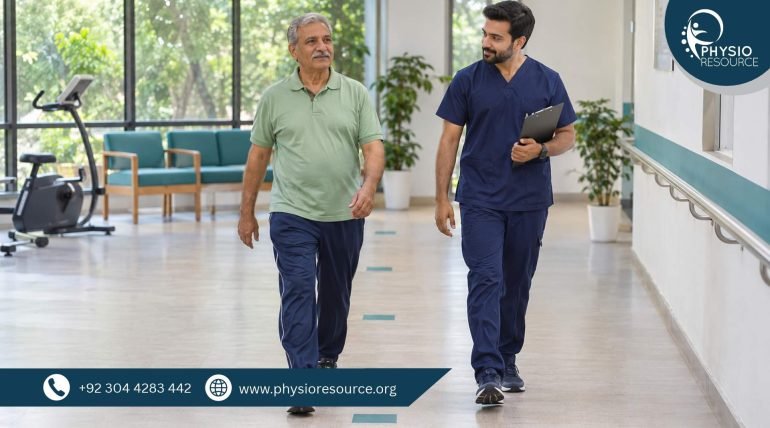
One commonly used test is the six-minute walk test (6MWT). You walk along a measured corridor for six minutes, with appropriate monitoring. It helps assess functional exercise capacity.
Your team may also monitor:
- Oxygen saturation (SpO₂).
- Heart rate.
- Breathlessness during activity.
- Recovery time after exercise.
- Walking distance and physical function.
The American Thoracic Society’s pulmonary rehabilitation guideline reports an average improvement of approximately 44 metres in six-minute walking distance across studies of people with stable COPD who completed rehabilitation compared with usual care. Individual results vary, and this figure is not a guaranteed personal outcome.
Is Pulmonary Rehabilitation Safe If I Have Severe COPD?
Many people with significant COPD can benefit from pulmonary rehabilitation, but exercise must be tailored to their condition.
Before starting, your respiratory doctor or rehabilitation team should consider:
- Whether your COPD is currently stable.
- Your oxygen levels at rest and during activity.
- Whether you use prescribed supplemental oxygen.
- Other conditions, such as heart disease.
- Recent hospital admissions or flare-ups.
- Your current walking and exercise tolerance.
If you use oxygen, follow your prescribed flow rate and medical instructions. Do not change your oxygen settings yourself to exercise for longer.
If you have a recent or worsening COPD flare-up, fever, chest infection or a significant change in breathing, contact your healthcare professional before exercising.
When Should You Seek Urgent Medical Help?
Do not try to exercise through severe or unusual symptoms. Seek urgent medical attention if you experience:
- Severe breathlessness at rest or difficulty speaking because of breathlessness.
- New or persistent chest pain or pressure.
- Blue or grey lips or fingertips.
- Confusion, fainting or unusual drowsiness.
- Coughing up blood.
- A sudden, significant worsening of your usual breathing symptoms.
A sudden deterioration may need medical treatment rather than a rehabilitation session.
Pulmonary Rehabilitation in Lahore: What Should You Ask?
If you are considering pulmonary rehabilitation in Lahore, ask whether the programme includes:
- An initial respiratory and functional assessment.
- Supervised walking and strengthening exercises.
- Monitoring appropriate to your medical condition.
- Breathing and breathlessness-management education.
- A personalised home exercise plan.
- Progress reviews and communication with your respiratory doctor.
At PhysioResource in Gulberg III, Lahore, you can contact the clinic to enquire about respiratory physiotherapy, pulmonary rehabilitation availability and referral options. Confirm that a suitably trained respiratory rehabilitation professional and appropriate monitoring are available before booking.
The right programme should be based on your COPD severity, medical stability and personal goals—not a standard exercise routine.
Contact us
Phone No: 0304-4283442
Physio Resource
Address: 93-A1, Gurumangat Road, Gullberg, III Lahore
Frequently Asked Questions
Can pulmonary rehabilitation increase my walking distance with COPD?
Yes. Many people with COPD improve their exercise capacity and walking distance after completing a structured pulmonary rehabilitation programme. The amount of improvement differs from person to person.
How long does pulmonary rehabilitation take?
Programme length varies. Many established programmes run for approximately 8–12 weeks, with supervised sessions and a home exercise plan. Your healthcare team can advise what is appropriate for your needs.
Can I join pulmonary rehabilitation if I use oxygen?
Possibly. Many people who use prescribed oxygen can participate, provided the programme is appropriately supervised and follows their oxygen prescription and medical advice.
Should I exercise if I feel breathless while walking?
Breathlessness during activity is common with COPD, but exercise intensity must be appropriate. A supervised assessment can help determine a safe starting level. Do not exercise through severe, unusual or rapidly worsening breathlessness.
Is pulmonary rehabilitation useful after a COPD hospital admission?
Yes. The American Thoracic Society recommends pulmonary rehabilitation after hospitalisation for a COPD exacerbation, once the person is medically appropriate to participate. The treating team can advise on timing and suitability.
Does pulmonary rehabilitation cure COPD?
No. Pulmonary rehabilitation does not reverse the underlying lung damage. It aims to improve exercise capacity, symptom management, confidence and quality of life while complementing medical COPD treatment.
Author: Dr Ahmad Bilal, DPT — Doctor of Physical Therapy.
Clinical review note: Have this article reviewed by a respiratory physician or qualified pulmonary rehabilitation professional before publication. Verify the author’s credentials and the clinic’s actual respiratory rehabilitation services before making service claims.

